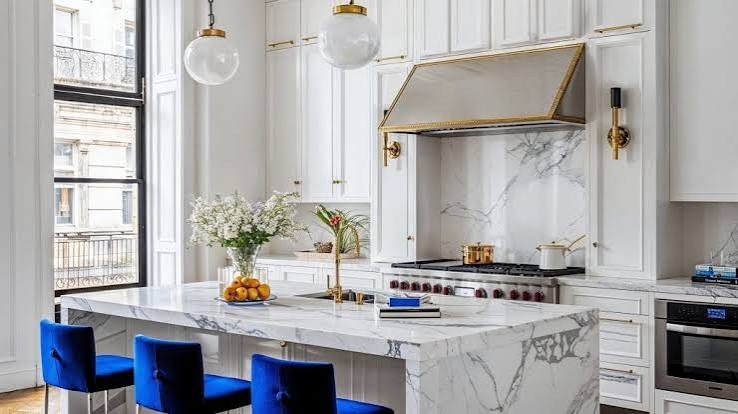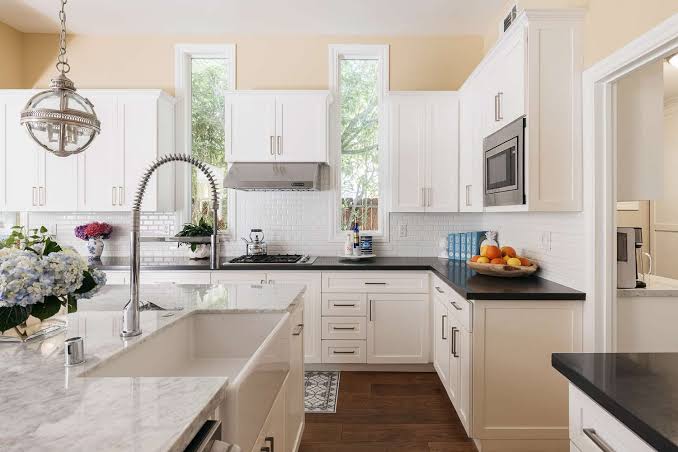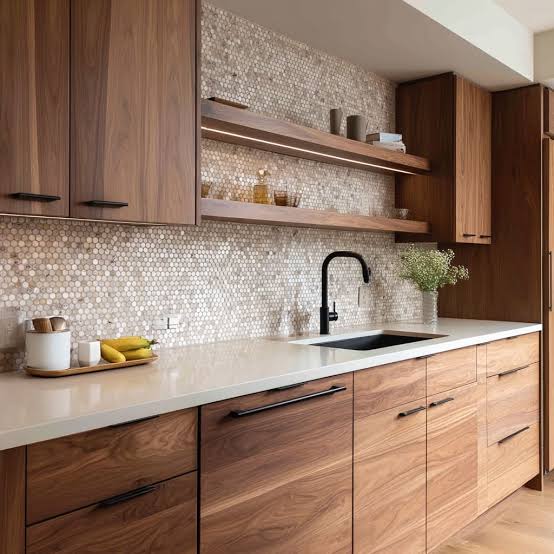
Brown cabinets can give a kitchen a warm, grounded, and timeless appearance. The right backsplash can enhance that warmth while adding contrast, texture, or a fresh modern touch. I love how brown cabinetry works with so many materials, including white tile, natural stone, glass, marble, and colorful ceramic designs. A backsplash also gives you an opportunity to connect the cabinets with your countertops, flooring, hardware, and lighting.
You can keep the look simple with neutral tile or create a stronger focal point with bold patterns. Here are 23 kitchen backsplash ideas that can help you create a beautiful, balanced, and functional space around brown cabinets.
1. White Subway Tile With Brown Cabinets

White subway tile is one of the easiest ways to brighten a kitchen with brown cabinets. The crisp white surface creates a pleasing contrast against warm or dark cabinetry while keeping the overall design timeless. I especially like this combination when the kitchen has limited natural light because the lighter backsplash can make the cooking area feel more open. Choose white grout for a seamless appearance or darker grout to emphasize the tile pattern.
Brass hardware can add warmth, while black fixtures create a stronger contrast. This backsplash works beautifully in farmhouse, traditional, transitional, and modern kitchens.
2. White Marble Backsplash

White marble can create an elegant contrast against brown cabinets while maintaining a warm and sophisticated atmosphere. The natural veining adds visual interest without requiring a busy pattern, making it a beautiful choice for kitchens with simple cabinetry.
I like pairing marble with brass handles and warm lighting because these details complement the brown tones beautifully. A full-height marble backsplash can make the cooking wall feel especially polished. If natural marble does not suit your maintenance preferences, marble-look porcelain or quartz surfaces can provide a similar appearance. Keep surrounding accessories relatively simple so the stone remains the main feature.
3. Beige Tile Backsplash

A beige backsplash can create a soft and cohesive look with brown cabinets. Instead of creating strong contrast, beige sits comfortably alongside warm wood tones and creates a relaxed appearance. I like this option for kitchens that already use earthy colors such as tan, cream, terracotta, or warm gray. Textured beige tiles can add dimension without introducing another strong color. You can also choose a subtle stone-look tile for a more natural effect.
Brass or bronze hardware works particularly well with this palette. This combination is ideal if you want the backsplash to complement the brown cabinetry rather than compete with it.
4. Green Tile Backsplash With Brown Cabinets

Green and brown create a natural color combination that can make a kitchen feel warm and connected to nature. Sage green offers a soft appearance, while deeper forest or olive shades can create a richer look. I particularly like muted green tile with medium-brown wooden cabinets because the colors complement one another without feeling too similar. Add natural stone countertops, wooden accessories, and brass hardware to reinforce the earthy character.
If the cabinets are very dark, choose a lighter green backsplash to maintain some contrast. This idea works beautifully in cottage, organic, farmhouse, and contemporary kitchens.
5. Gray Backsplash With Brown Cabinets

Gray tile can introduce a cooler element into a kitchen dominated by warm brown cabinetry. Light gray creates gentle contrast, while charcoal gray can produce a dramatic and sophisticated appearance. I like using gray when the kitchen needs a more modern direction without completely changing the warm character of the cabinets.
Choose a tile with subtle texture or movement to prevent the backsplash from feeling flat. Stainless steel appliances can complement cooler gray tones, while wood accessories can maintain warmth. A balanced combination of brown and gray can work particularly well in contemporary, industrial, and transitional kitchen designs.
6. Marble-Look Subway Tile

Marble-look subway tiles combine the familiar shape of subway tile with the elegant appearance of subtle stone veining. This can be a great choice if you want your brown cabinets to feel lighter and more refined. I like using a white or cream base with soft gray veining because it creates enough contrast without looking too stark.
The rectangular tile shape keeps the design familiar and versatile. Pair it with simple countertops and understated hardware so the backsplash remains balanced. This idea can work especially well in kitchens where you want a traditional tile layout with a slightly more elevated appearance.
7. Cream Zellige Tile Backsplash

Cream zellige-style tiles can add beautiful texture to a kitchen with brown cabinets. Their slightly irregular surfaces and subtle color variation give the backsplash a handcrafted appearance. I love this combination because the warm cream tones complement brown cabinetry without creating a harsh contrast.
The reflective surface can also catch natural and artificial light, adding gentle movement to the cooking wall. Pair the tiles with wood, brass, stone, or other natural finishes for a cohesive look. This backsplash works particularly well in kitchens inspired by Mediterranean, cottage, organic, and modern farmhouse styles.
8. Black Backsplash With Brown Cabinets
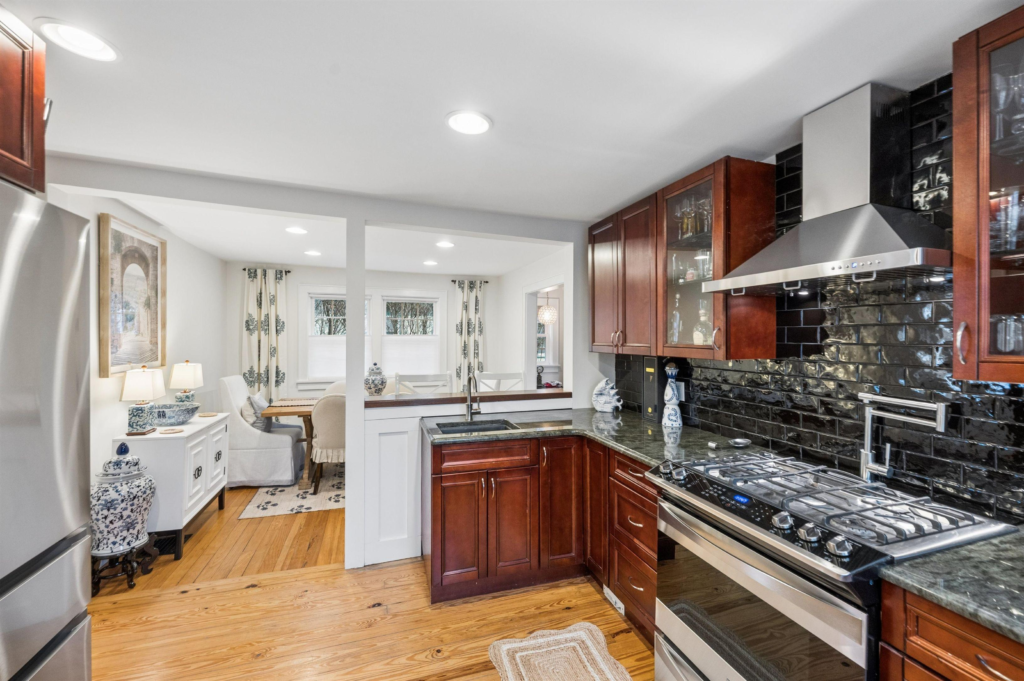
A black backsplash can create a dramatic kitchen when paired with brown cabinetry. This combination works particularly well when you want a deeper, moodier appearance rather than a bright kitchen. I like using matte black tiles with warm wood because the contrast between the materials creates visual depth. If both the cabinets and backsplash are dark, introduce lighter countertops, warm lighting, or metallic hardware to prevent the room from feeling too heavy.
Black backsplash tile can also work beautifully with black appliances for a coordinated appearance. This design suits modern, industrial, contemporary, and dramatic kitchen interiors.
9. Terracotta Backsplash

Terracotta tiles can enhance the earthy warmth already present in brown cabinetry. Their reddish-orange tones create a natural connection with wood while adding a slightly more colorful element to the kitchen. I like using terracotta in kitchens with warm countertops, natural stone, and brass or bronze hardware. You can choose traditional square tiles or experiment with elongated or geometric shapes for a modern twist.
Keep the surrounding colors relatively restrained so the terracotta does not compete with the cabinetry. This backsplash is particularly attractive in Mediterranean, rustic, farmhouse, and organic kitchen designs.
10. Blue Backsplash With Brown Cabinets

Blue can introduce a refreshing contrast to warm brown cabinetry. Soft blue creates an airy appearance, while navy or deep blue produces a richer and more dramatic effect. I like pairing medium-brown cabinets with muted blue tile because the colors balance each other beautifully. White or cream countertops can brighten the combination, while brass hardware can add warmth. If your cabinets are very dark, consider a lighter blue backsplash to create stronger separation.
Patterned blue tiles can also work well if the cabinetry is relatively simple. This combination suits coastal, traditional, transitional, and contemporary kitchens.
11. Herringbone Backsplash

A herringbone backsplash adds movement while keeping the overall material relatively simple. White, cream, or light gray tiles arranged in this angled pattern can provide an attractive contrast against brown cabinetry.
I like this approach because the pattern creates visual interest without requiring a bold color. Use matching grout for a softer appearance or contrasting grout to make the herringbone layout more noticeable. Keep the countertop relatively calm if you choose a strong grout color. This backsplash can work with traditional wood cabinets as well as modern flat-panel cabinetry, making it a flexible option for different kitchen styles.
12. Natural Stone Backsplash

Natural stone can create a beautiful connection between brown cabinetry and other earthy kitchen materials. Depending on the stone, you can achieve a subtle neutral appearance or a more textured rustic look. I particularly like stone backsplashes with medium and dark brown cabinets because the natural variations make the room feel layered and organic.
Choose a stone that contains complementary shades rather than too many competing colors. Wood flooring and simple ceramic accessories can reinforce the natural character. This idea works especially well in rustic, farmhouse, Mediterranean, lodge-inspired, and organic modern kitchens.
13. White Hexagon Tile Backsplash

White hexagon tiles can give brown cabinetry a fresh and modern contrast while adding a subtle geometric detail. The six-sided shape feels more distinctive than traditional rectangular tile but remains relatively easy to coordinate. I like using small white hexagons when the cabinets are dark because the backsplash can brighten the wall considerably. Larger hexagons can create a cleaner and more contemporary appearance.
Choose a simple grout color if you want the shape to remain understated. This backsplash works particularly well in modern, Scandinavian, transitional, and minimalist kitchens where geometric details can add interest.
14. Glossy White Tile Backsplash

Glossy white tiles can help reflect light around brown cabinets and make the kitchen feel brighter. This is particularly useful when the cabinetry is dark or the room receives limited natural light.
I like using glossy square or rectangular tiles with warm brown wood because the contrast feels clean without becoming too stark. Under-cabinet lighting can enhance the reflective surface and create a pleasant evening glow. Keep the countertop simple if you want the backsplash to remain the main bright feature. This option is practical and versatile, working well in traditional, modern, farmhouse, and transitional kitchens.
15. Patterned Ceramic Backsplash

A patterned ceramic backsplash can give brown cabinets a strong dose of personality. Floral, geometric, Moroccan-inspired, or abstract patterns can all work, depending on the overall kitchen style. I recommend choosing a design that contains at least one color already present in the room so the backsplash feels connected to the cabinetry and countertop. If the cabinets have prominent wood grain, a moderate pattern can create a nice balance.
Keep other decorative surfaces relatively simple so the backsplash remains the main feature. This is an excellent choice when you want your kitchen to feel unique rather than completely neutral.
16. Glass Tile Backsplash
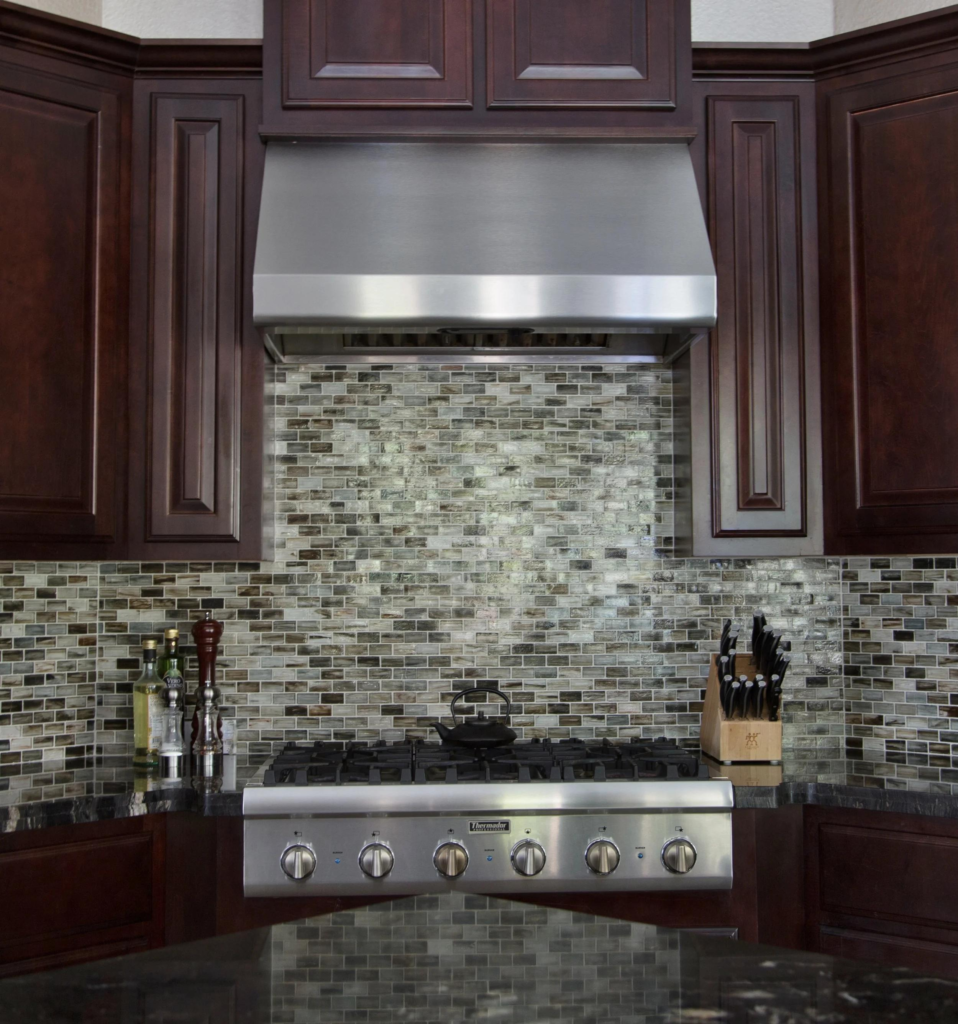
Glass tiles can create a clean and reflective backsplash that works beautifully with brown cabinets. Clear, white, gray, blue, or soft green glass can introduce color while helping reflect light around the cooking area. I like using glass tile when the kitchen needs a brighter and more contemporary feeling.
Smaller tiles can create a mosaic appearance, while larger formats offer a cleaner visual effect. Pair the backsplash with simple countertops and streamlined hardware so the reflective surface does not compete with too many elements. This style works particularly well in modern and transitional kitchens.
17. Warm White Backsplash

A warm white backsplash can create a softer alternative to bright, cool white tile. Creamy whites and ivory shades complement the warmth of brown cabinets while still providing enough contrast to keep the kitchen bright. I like this combination for traditional and farmhouse kitchens where pure white can sometimes feel too stark. Handmade-looking tiles can add gentle texture, while smooth porcelain creates a cleaner appearance.
Warm white also works beautifully with brass, bronze, and natural wood accessories. If you want a backsplash that feels timeless and comfortable rather than highly contrasting, this is a simple and effective direction.
18. Dark Green Backsplash

Dark green tile can create a rich, nature-inspired kitchen when paired with brown cabinets. Forest, olive, and deep moss shades can complement wood beautifully while introducing a sophisticated color element. I like this combination with brass hardware and warm lighting because the metallic details can prevent the darker palette from feeling too heavy. Use a lighter countertop if you want more contrast, or continue the deep tones for a dramatic kitchen.
Glossy green tile can reflect light and add dimension, while matte finishes create a quieter appearance. This design works particularly well in moody, traditional, cottage, and organic kitchens.
19. Concrete-Look Backsplash
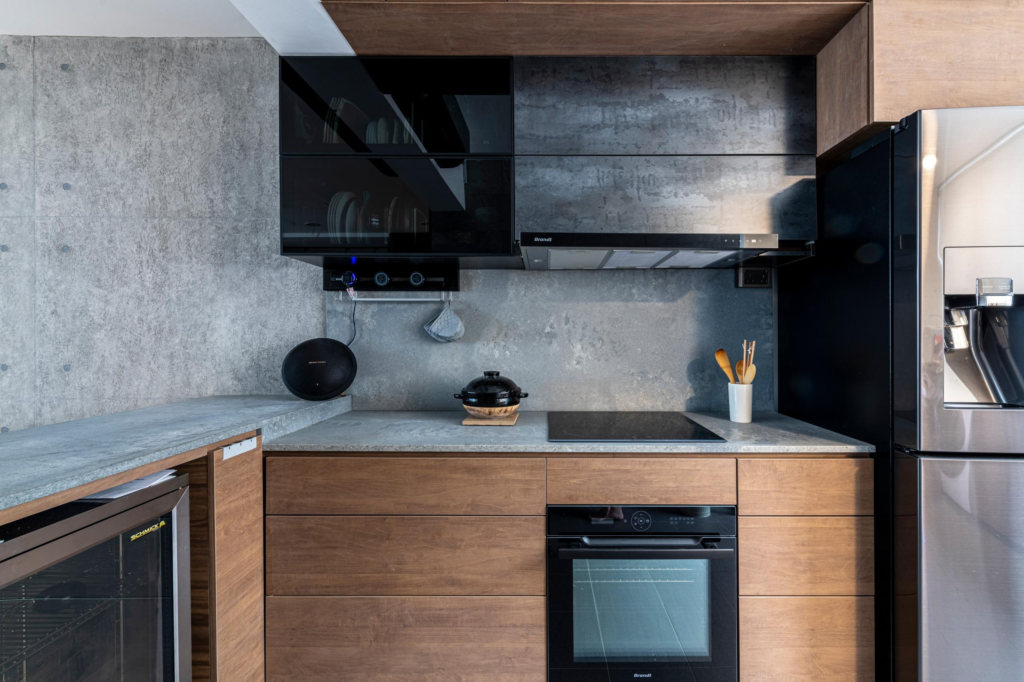
A concrete-look backsplash can introduce a modern industrial quality to brown cabinetry. The cool gray surface creates contrast against warm wood while maintaining a relatively neutral appearance. I like this option when you want the kitchen to feel contemporary without introducing another strong color. Pair it with black hardware, simple lighting, and streamlined countertops for a cohesive modern look. Natural wood accessories can soften the industrial character and keep the kitchen welcoming.
A concrete-inspired porcelain or ceramic surface can also provide the visual effect while offering different practical characteristics. This backsplash works especially well in urban and contemporary interiors.
20. Beige And Brown Coordinated Backsplash

A beige-and-brown backsplash can create a warm, layered kitchen where the colors feel naturally connected. Instead of creating dramatic contrast, this palette focuses on subtle variations in tone and texture. I like using beige stone-look tile with brown cabinets because the lighter surface prevents the room from feeling too dark while maintaining a warm atmosphere. Add cream countertops and brass hardware for a sophisticated appearance.
Natural wood accessories can reinforce the earthy palette. This idea works especially well in kitchens that favor cozy, traditional, farmhouse, Mediterranean, and organic design styles.
21. Vertical Tile Backsplash
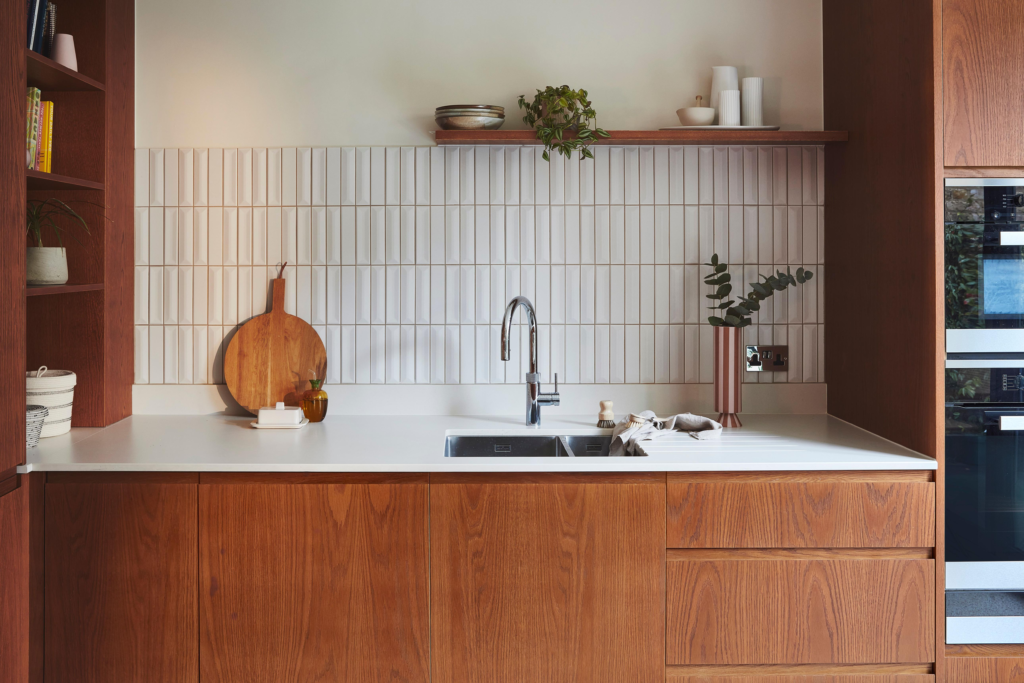
Vertical tile installation can give a familiar backsplash material a more contemporary appearance. Slim rectangular tiles positioned vertically can draw the eye upward and create a sense of height behind brown cabinets. I like using white, cream, or muted green tiles because they provide contrast while keeping the pattern relatively simple. This layout works particularly well when the kitchen has tall ceilings or wants to emphasize vertical space.
Pair it with clean cabinet hardware and simple countertops. A vertical arrangement can make even basic subway-style tile feel more customized and modern without requiring an unusual material.
22. Cream And Gold Backsplash

Cream and gold accents can create a warm and refined backsplash combination with brown cabinetry. A cream tile provides the main background, while subtle gold details can appear through hardware, decorative trim, or metallic mosaic accents. I like this look because it brings brightness into the kitchen without losing the warmth of the wood.
Keep the gold details restrained so the design feels elegant rather than overly decorative. Brass faucets and cabinet pulls can repeat the metallic finish throughout the space. This combination works particularly well in traditional, transitional, luxury-inspired, and warm contemporary kitchens.
23. Full-Height Marble Backsplash With Brown Cabinets

A full-height marble backsplash can create a dramatic focal point while beautifully contrasting with brown cabinetry. Instead of stopping at the bottom of the upper cabinets, the stone can continue upward to create a larger visual feature. I like this approach with warm brown wood because the white or cream stone brings brightness while the natural veining adds sophistication.
Choose a countertop that complements the marble rather than competing with it. Simple hardware and understated accessories usually work best. This design can make the cooking wall feel luxurious and carefully considered without requiring excessive decoration elsewhere in the kitchen.
Brown cabinets already bring warmth and character to a kitchen, and the right backsplash can make that foundation even more attractive. I love how different materials can completely change the mood, with white tile creating contrast, green adding an earthy feeling, marble introducing elegance, and natural stone bringing texture. Think about the cabinet shade, countertop, lighting, hardware, and overall kitchen style before selecting your backsplash.
A coordinated design can make the entire room feel more balanced and intentional. You do not need an elaborate pattern to create impact; sometimes a simple tile in the right color is enough. These ideas can help you build a kitchen that feels stylish, welcoming, and practical.