Kitchen flooring plays an important role in the comfort, appearance, and functionality of your home. The right tile can make your kitchen feel brighter, more spacious, elegant, or cozy while providing a durable surface for everyday activities.
You can explore different colors, patterns, textures, and materials to find flooring that suits your lifestyle. Porcelain, ceramic, stone-look, and patterned tiles offer plenty of design possibilities for modern kitchens. In this article, I’m sharing 23 kitchen flooring tile ideas to inspire your next renovation and help you create a stylish surface that looks beautiful and performs well every day.
1. Large Format Porcelain Kitchen Floor Tiles

Large format porcelain tiles can give your kitchen a clean and spacious appearance. Their larger dimensions create fewer visible grout lines, helping the floor look more continuous and streamlined. Choose soft beige, light gray, cream, or stone-inspired shades for a modern interior. Porcelain is also a practical option because it is durable and available in many finishes.
Before installation, check the tile’s slip resistance and suitability for kitchen use. Use grout that complements the tile color to create a unified appearance, especially if you want a calm and minimalist flooring design.
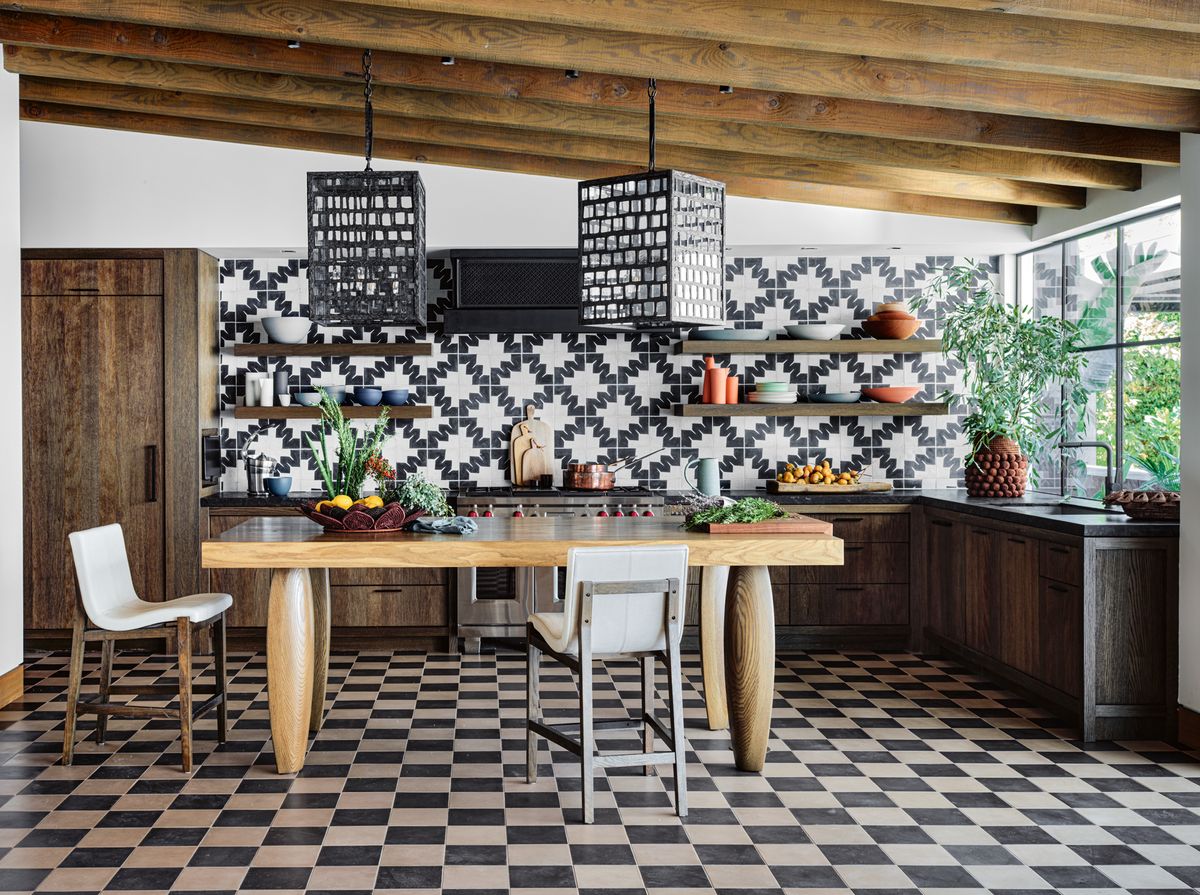
2. Checkerboard Kitchen Floor Tiles

Checkerboard flooring can bring a timeless and stylish appearance to your kitchen. The traditional black-and-white combination creates strong contrast, while softer shades such as cream and taupe offer a more relaxed look. You can use large square tiles for a contemporary effect or smaller tiles for a classic appearance. Keep the cabinets simple if the floor has a bold pattern.
Checkerboard tiles work well with farmhouse, vintage, and modern kitchen designs. Choose a durable, easy-to-clean surface and plan the tile alignment carefully so the pattern looks balanced across the entire room.
3. Wood-Look Porcelain Kitchen Tiles

Wood-look porcelain tiles offer the appearance of timber while providing the practical qualities of a tiled surface. They are available in finishes that imitate oak, walnut, reclaimed wood, and other natural styles. These tiles can work beautifully in kitchens with white cabinets, farmhouse furniture, or contemporary designs. Use long plank-style tiles to create a more realistic wood floor effect.
Pay attention to the tile layout and grout color for a natural result. This flooring option can provide visual warmth while offering a surface that is generally easier to maintain than natural wood.
4. Marble-Look Kitchen Floor Tiles

Marble-look tiles can add an elegant and luxurious appearance to a kitchen without requiring natural marble throughout the room. White tiles with gray veining create a sophisticated look, while beige or darker marble patterns can bring warmth and drama.
Pair the flooring with simple cabinets so the veining remains a noticeable feature. Porcelain marble-look tiles can offer easier maintenance than some natural stone options, although the exact care requirements depend on the product. Choose a suitable finish for kitchen floors, and coordinate the tile pattern with your countertop and backsplash.
5. Terracotta-Style Kitchen Floor Tiles

Terracotta-style tiles can create a warm and inviting kitchen with an earthy character. Their orange, rust, and brown tones work well with cream cabinets, wooden furniture, and natural materials. You can choose genuine terracotta or modern tiles designed to imitate its appearance. This flooring style suits Mediterranean, rustic, farmhouse, and traditional kitchens.
Because the surface and finish can vary, check the manufacturer’s cleaning and sealing recommendations before installation. Use neutral walls and simple countertops to balance the rich floor color and create a comfortable space that feels relaxed and welcoming.
6. Hexagon Kitchen Floor Tiles

Hexagon tiles can add a modern geometric detail to your kitchen flooring. They are available in neutral colors, bold shades, stone-inspired finishes, and decorative patterns. Large hexagons can create a contemporary appearance, while small tiles may offer a more detailed design. Use a single color for a subtle effect or combine two shades to highlight the pattern.
Hexagon flooring looks attractive with simple cabinetry because the shape adds visual interest without requiring additional decoration. Make sure the installation is carefully planned, especially around cabinets, corners, and doorways, to maintain a consistent pattern.
7. Slate-Look Kitchen Floor Tiles

Slate-look tiles can give your kitchen a natural and slightly dramatic appearance. Dark gray, charcoal, and earthy shades work well with white, wood, and light-colored cabinetry. These tiles can create a grounded appearance in modern, rustic, or industrial interiors.
Porcelain versions may provide a practical alternative to natural slate, but surface texture and cleaning requirements vary. Use suitable lighting to balance darker flooring, especially in kitchens with limited sunlight. A coordinated backsplash or countertop can help connect the floor with the rest of the design and create a cohesive finish.
8. Soft Beige Kitchen Floor Tiles

Beige floor tiles are a versatile choice for creating a warm and timeless kitchen. Their neutral color works with white, cream, green, blue, and wooden cabinets, making it easier to update other parts of the room later. Choose a matte finish for a softer appearance or a lightly polished surface for a brighter effect, depending on the manufacturer’s recommendations for flooring.
Beige tiles can help conceal small amounts of everyday dust and create a welcoming atmosphere. Pair them with warm lighting and natural textures for a comfortable kitchen design.
9. Geometric Patterned Kitchen Tiles

Geometric patterned tiles can turn the kitchen floor into an attractive design feature. Consider triangles, diamonds, repeating shapes, or abstract patterns in neutral or contrasting colors. This style works particularly well when the cabinets and walls have a simple finish.
If the floor pattern is bold, avoid using too many competing designs on the backsplash or countertops. Carefully measure the room before installation so the pattern aligns well across the floor. Choose a tile with a suitable texture and maintenance profile for regular cooking, cleaning, and household activity.
10. Concrete-Look Kitchen Floor Tiles

Concrete-look tiles can give your kitchen a modern industrial appearance while maintaining a more polished finish. Gray, warm taupe, and pale concrete shades work well with handleless cabinets, metal details, and natural wood.
These tiles can create a continuous visual effect across open-plan kitchens and dining areas. Use warm furniture and soft lighting to prevent the space from feeling too cold. Porcelain or ceramic options come in several textures and patterns, so review the product’s specifications carefully. Select a suitable surface for walking comfort, cleaning, and kitchen safety.
11. Herringbone Kitchen Floor Tiles

Herringbone tile flooring can add movement and sophistication to a kitchen. The angled arrangement creates a decorative pattern that works well with both traditional and modern interiors.
You can use wood-look tiles for a warm effect or narrow rectangular tiles in stone-inspired colors for a contemporary finish. Keep the surrounding design simple so the pattern remains the main feature. Installation may require more planning and cutting than a standard layout, particularly around edges and cabinets. Use a grout color that supports the design without creating excessive visual contrast.
12. Terrazzo-Style Kitchen Floor Tiles

Terrazzo-style tiles can add texture and personality to a kitchen floor. Their decorative chips may include subtle gray, beige, black, or colorful details, depending on the design. Use terrazzo-inspired flooring with plain cabinets and simple countertops to maintain a balanced appearance.
The pattern can help create visual interest in a neutral kitchen without requiring bold wall colors. Choose a product suitable for floor installation and check how its finish responds to stains and cleaning. Coordinate the tile’s colors with small kitchen accessories for a cohesive overall design.
13. White Kitchen Floor Tiles

White floor tiles can make a kitchen feel bright, clean, and open. They work particularly well in smaller spaces or rooms that need additional visual light. Pair white tiles with wooden cabinets, black details, pastel colors, or matching white cabinetry.
A matte or lightly textured finish may offer a softer appearance than a highly polished surface. Keep in mind that lighter floors can show spills and dirt more clearly, so cleaning routines are important. Use contrasting grout or subtle tile variations if you want to avoid an overly plain result.
14. Black Kitchen Floor Tiles

Black floor tiles can create a bold and sophisticated kitchen design. They look striking with white cabinets, natural wood, metallic fixtures, and light countertops. Matte black tiles offer a contemporary appearance, while patterned or textured finishes can introduce additional depth. Dark flooring may show dust or marks differently depending on the surface, so review maintenance requirements before making a decision.
Use sufficient lighting and lighter accents to balance the room. Black tiles are particularly effective when you want the kitchen to feel grounded and visually dramatic without using numerous decorative features.
15. Small Mosaic Kitchen Floor Tiles

Small mosaic tiles can create a detailed and decorative kitchen floor. They are available in square, hexagonal, circular, and irregular shapes, allowing you to choose a design that suits your interior. Neutral mosaic tiles can create a subtle texture, while contrasting shades can form a noticeable pattern.
Because mosaic flooring includes more grout lines, cleaning and maintenance should be considered carefully. Choose a suitable grout color and a surface designed for floor use. This option can work well in smaller kitchens, utility spaces, or areas where you want a decorative flooring feature.
16. Checkerboard Beige And Cream Tiles

Beige and cream checkerboard tiles offer a softer alternative to the classic black-and-white pattern. The combination creates visual interest while maintaining a warm and neutral atmosphere. This design works well with wood cabinets, cream kitchens, brass fixtures, and traditional dining furniture.
Use larger tiles for a more modern appearance or smaller squares for a vintage-inspired effect. Consider how the pattern aligns with the room’s shape and cabinetry. Keep the rest of the kitchen relatively simple so the floor adds character without competing with other prominent finishes.
17. Natural Stone-Look Kitchen Floor Tiles

Natural stone-look tiles can bring an organic and timeless appearance to your kitchen. Designs inspired by limestone, travertine, sandstone, and slate offer variations in color and texture. They can work well with wooden cabinets, neutral walls, and rustic furniture. Porcelain options may provide a practical alternative to natural stone, though each product has specific installation and care requirements.
Choose a finish suitable for kitchen flooring and review its slip-resistance rating. A stone-inspired floor can provide subtle character while allowing the cabinets and furniture to remain the main decorative features.
18. Blue Patterned Kitchen Floor Tiles

Blue patterned tiles can introduce a fresh and expressive touch to your kitchen floor. Navy, teal, pale blue, and white designs can suit coastal, Mediterranean, traditional, and modern interiors. Use the floor as the main color feature and keep the cabinets neutral for a balanced appearance. You can repeat a small blue detail in the backsplash, dining chairs, or kitchen accessories.
Before installation, check the pattern’s alignment and the tile’s suitability for flooring. A blue design can make the room feel distinctive without requiring brightly colored cabinets.
19. Warm Gray Kitchen Floor Tiles

Warm gray tiles are an adaptable choice for a modern kitchen. Their subtle undertones can complement white, beige, wood, green, and dark-colored cabinets. Unlike cooler gray finishes, warm gray can create a more welcoming appearance when combined with natural materials and soft lighting.
Choose a simple square tile, large format design, or stone-inspired pattern depending on your preferred style. Use matching grout for a seamless look or a contrasting shade to emphasize the tile arrangement. This flooring color can remain attractive even if you update the kitchen cabinets later.
20. Penny-Style Kitchen Floor Tiles

Penny-style tiles can create a playful and detailed appearance in a kitchen. Their small circular shapes provide a distinctive alternative to traditional square or rectangular flooring. You can choose white, black, gray, metallic, or multicolored designs to suit the room’s style.
Because this pattern includes many grout lines, select a grout color and cleaning method carefully. Penny tiles can work well as a decorative feature in a smaller kitchen or a defined zone. Ensure the selected product is specifically suitable for floor installation and regular household traffic.
21. Large Checkerboard Marble-Effect Tiles
Large checkerboard marble-effect tiles can combine a classic pattern with a contemporary finish. Pair white marble-style tiles with charcoal or black alternatives to create a strong but elegant design. Larger squares may make the pattern feel more modern and reduce the number of grout lines.
Use simple cabinets and understated hardware so the flooring remains visually prominent. This style can work well in spacious kitchens, but it may also suit smaller rooms when the color contrast is carefully selected. Check the surface’s cleaning requirements and suitability for everyday kitchen use.
22. Basketweave Kitchen Floor Tiles

Basketweave tiles can add a classic architectural detail to your kitchen floor. The pattern usually combines rectangular and square pieces to create a woven appearance.
White and gray combinations offer a timeless look, while beige and cream tones create a softer atmosphere. This flooring can suit traditional, transitional, and contemporary kitchens when paired with appropriate cabinetry. Because the pattern requires careful placement, professional installation may be useful for achieving consistent alignment. Choose a durable surface and suitable grout so the floor remains practical as well as visually attractive.
23. Mixed-Size Kitchen Floor Tile Design

Mixed-size tile flooring can create a natural and less uniform appearance in your kitchen. The design combines tiles of different dimensions, often using coordinated colors and stone-inspired textures. This approach works well in rustic, Mediterranean, farmhouse, and transitional interiors. Choose a tile collection designed for mixed-format installation so the pieces fit together correctly.
Keep the cabinets and walls relatively simple if the floor has a detailed arrangement. Plan the layout carefully before installation, especially around corners, appliances, and doorways, to create a balanced and professional finish.
The right kitchen floor tiles can improve the appearance and everyday comfort of your cooking space. You can choose large porcelain surfaces, warm wood-look designs, classic checkerboard patterns, decorative mosaics, or natural stone-inspired finishes to suit your home. Consider durability, cleaning needs, slip resistance, color, and installation requirements before making your final choice.
Your flooring should complement the cabinets, countertops, lighting, and overall design while supporting daily household activities. With thoughtful planning, attractive tile selection, and a practical layout, you can create a kitchen floor that brings style, comfort, and lasting function into your home.