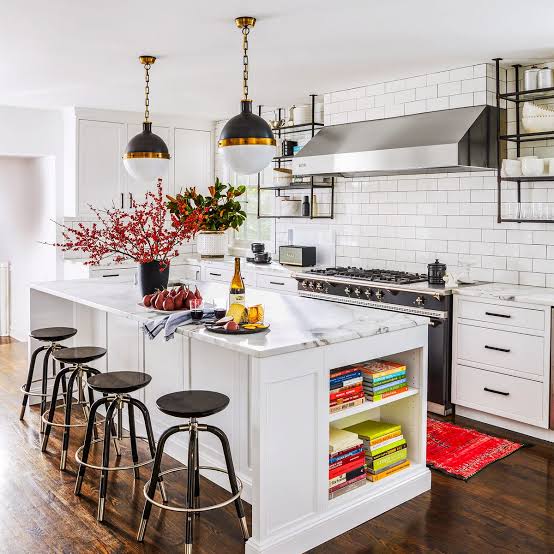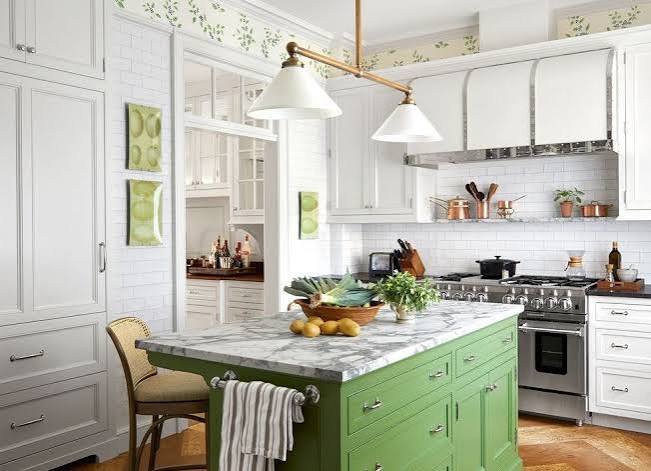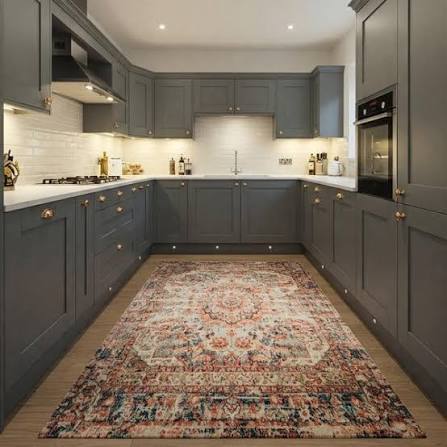
A kitchen rug can add warmth, comfort, and personality to a space that often contains hard surfaces. I love how a simple runner or patterned rug can make cabinets, countertops, and flooring feel more connected. It can also make standing at the sink or preparing meals much more comfortable. The best part is that you do not need to change the entire kitchen to create a noticeable difference.
A well-chosen rug can introduce color, texture, pattern, or softness in an instant. Here are some kitchen rug ideas I love for creating a stylish and practical cooking space without making things complicated.
1. Long Kitchen Runner Rug

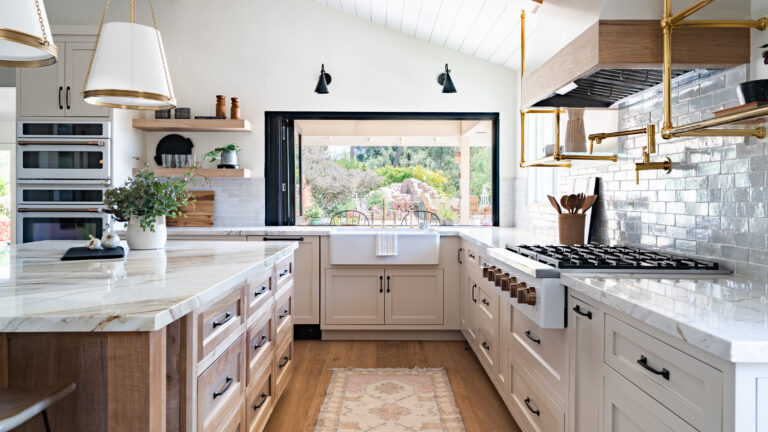
A long runner is one of my favorite choices for a kitchen because it fits naturally into narrow spaces. I especially like placing one between the kitchen island and the cabinets, where it can soften a large stretch of flooring.
Choose a runner with colors that complement your cabinets rather than competing with them. Neutral patterns work beautifully in colorful kitchens, while a brighter design can add interest to a simple space. A washable material is also worth considering because kitchen floors can become messy quickly. The right runner can make the entire kitchen feel warmer and more finished.
2. Vintage Kitchen Rug

A vintage-style rug can give a kitchen an inviting, lived-in character. I love designs featuring faded reds, muted blues, warm beige, or soft green because they tend to blend beautifully with different cabinet colors.
A vintage rug can work particularly well in farmhouse, cottage, traditional, and eclectic kitchens. Look for patterns that have some visual variation, as they can help disguise small spills and everyday marks. You can place one in front of the sink or use a longer runner along the main walkway. This simple addition can make a newer kitchen feel more relaxed and welcoming.
3. Neutral Kitchen Rug
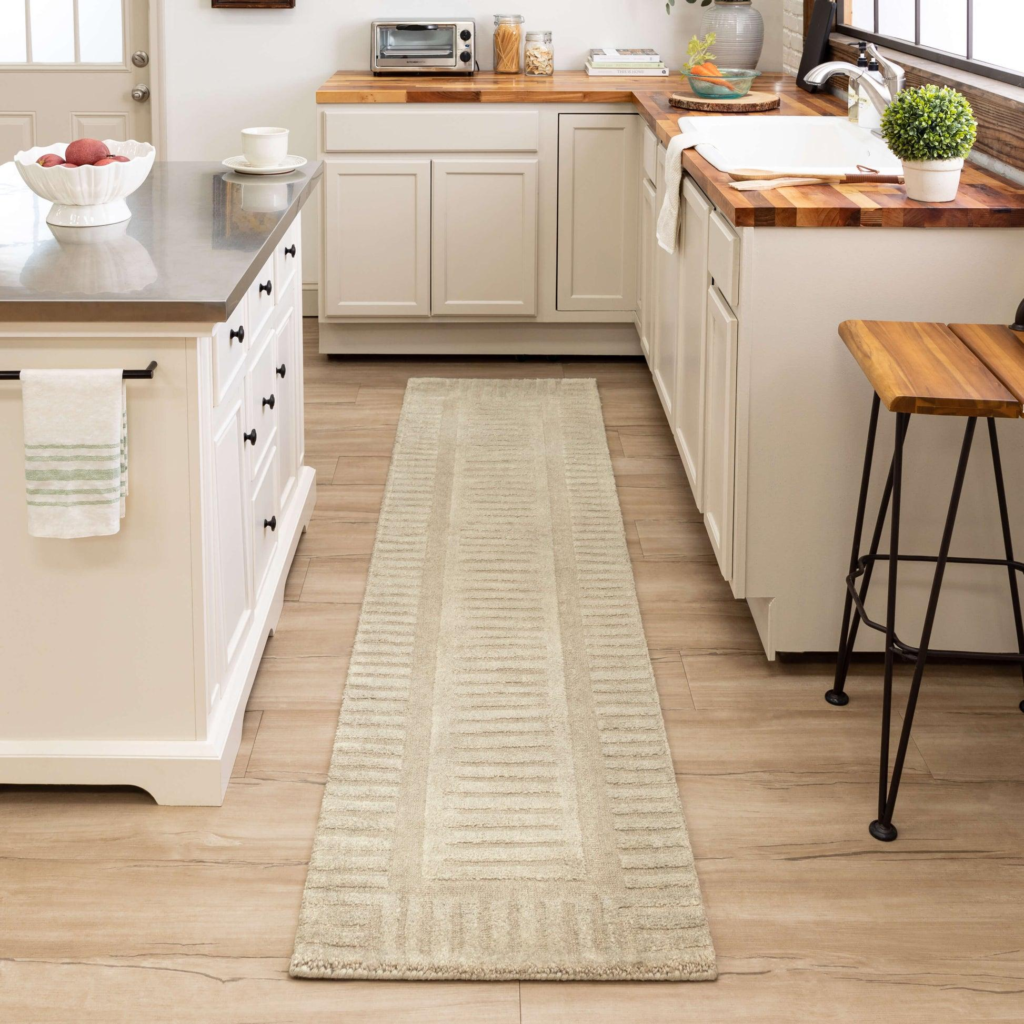
A neutral rug is perfect when you want softness without introducing a strong pattern. Shades such as beige, cream, taupe, oatmeal, and light gray can complement almost any kitchen style. I especially like this approach in kitchens that already have colorful cabinets, patterned backsplashes, or statement lighting. A simple neutral rug helps those features remain the stars of the room.
Choose a subtle woven texture if you want more visual interest without bold colors. It is an easy option for creating a calm and cohesive kitchen while still making hard floors feel considerably more comfortable.
4. Patterned Kitchen Rug

A patterned rug can instantly make a plain kitchen more interesting. I enjoy geometric patterns, small floral designs, traditional motifs, and soft abstract prints because they can introduce personality without requiring any permanent changes. If your cabinets and walls are neutral, you can choose a rug with stronger colors. In a busier kitchen, a subtle pattern may work better.
Think about repeating one color already present in the room so the rug feels connected to the overall design. This is a simple decorating trick that can give your kitchen a much more intentional appearance.
5. Farmhouse Kitchen Rug

Farmhouse kitchens look especially cozy with the right rug. I like designs featuring muted stripes, simple checks, vintage patterns, or soft earthy colors.
A farmhouse rug pairs nicely with white cabinets, natural wood, farmhouse sinks, and open shelving. You can place a runner in front of the main cabinets or choose a small rectangular rug near the sink. Look for materials that are easy to clean and comfortable underfoot. The goal is to create warmth without making the kitchen feel overly decorated. A simple farmhouse rug can bring together rustic details and modern conveniences beautifully.
6. Black and White Kitchen Rug
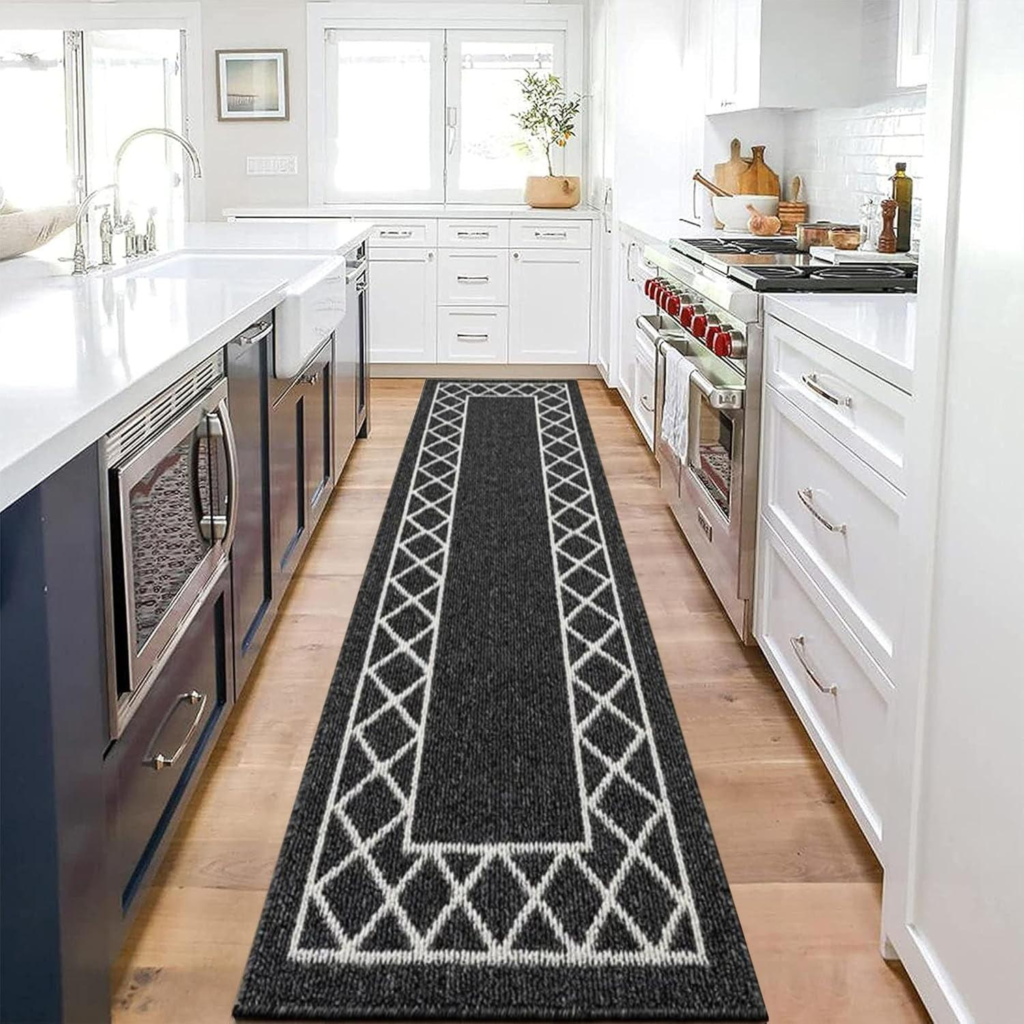
Black and white rugs are a great option when you want contrast without introducing several colors. I particularly like geometric patterns, stripes, checks, and simple Moroccan-inspired designs. They work well with white kitchens, black cabinets, natural wood, and modern appliances.
A black and white rug can also help connect darker hardware with lighter countertops. If the kitchen already has several decorative elements, choose a simple pattern so the room remains balanced. This combination is timeless enough to suit many styles while still giving the floor an eye-catching feature.
7. Colorful Kitchen Runner

A colorful runner is an easy way to bring personality into a kitchen that feels too plain. I love shades such as terracotta, mustard, teal, blue, green, and muted red because they can add warmth without looking too harsh. Choose a rug that includes at least one color already present in your kitchen to create a coordinated appearance.
A colorful runner works particularly well with white or light wood cabinets because the floor becomes a visual focal point. If you want a noticeable update without repainting cabinets or replacing countertops, this can be a surprisingly effective solution.
8. Small Rug In Front Of The Sink

A small rug placed directly in front of the sink can make a practical area feel much more comfortable. I like this option for kitchens where a full runner would feel too large or crowded. Choose a compact rug with a non-slip backing and a design that complements the surrounding cabinets.
A cushioned or woven surface can make standing during dishwashing and food preparation easier on your feet. Since this area sees plenty of activity, washable materials are especially useful. Even though the rug is small, it can create a noticeable decorative detail around one of the kitchen’s busiest spots.
9. Round Kitchen Rug

A round rug can soften the straight lines that dominate most kitchen designs. I like using one underneath a small breakfast table, beside a kitchen island, or in an open corner.
Round rugs work particularly well in kitchens with square islands and rectangular cabinets because their curved shape creates contrast. You can choose a simple neutral design for a subtle effect or select a patterned rug for more personality. Make sure the rug leaves enough room for comfortable movement around furniture. This idea can make an awkward corner feel intentional while adding softness to the overall layout.
10. Washable Kitchen Rug
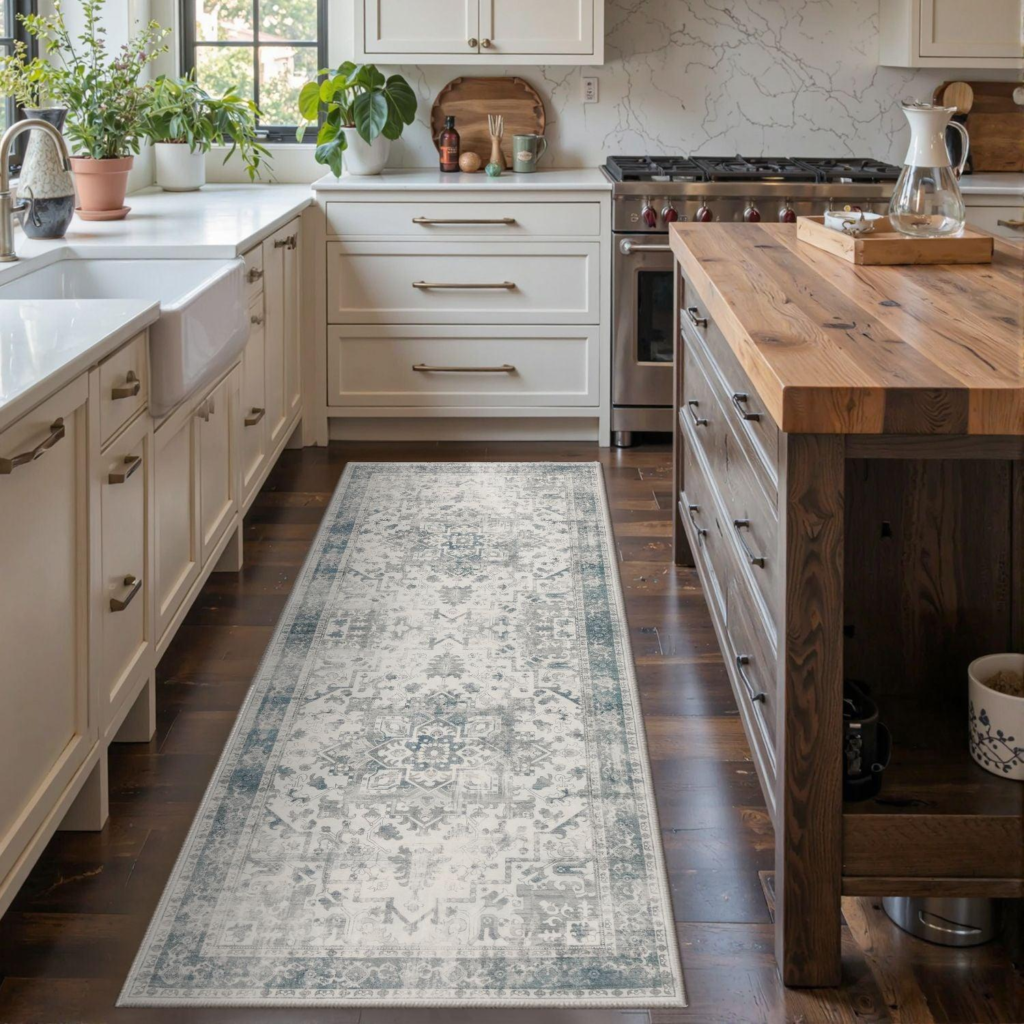
For a busy kitchen, I think a washable rug is one of the smartest choices. Kitchens naturally deal with crumbs, splashes, grease, and occasional spills, so being able to clean the rug easily makes everyday life much simpler. You can find washable designs in many styles, including vintage, modern, floral, geometric, and neutral patterns.
I recommend choosing a rug that fits your kitchen’s color palette while also being practical enough for regular cleaning. This allows you to enjoy the decorative benefits of a beautiful rug without constantly worrying about keeping it spotless.
11. Striped Kitchen Rug

Stripes are a simple pattern that can work in almost any kitchen. I like using narrow stripes in smaller kitchens because they can create a sense of direction along the floor. Wider stripes can make a stronger statement in a larger space.
Black and white stripes look crisp and modern, while beige and cream stripes create a softer farmhouse appearance. You can also choose colorful stripes if your kitchen needs more energy. Place the rug along a walkway or in front of a sink to define the area while adding a subtle decorative pattern.
12. Boho Kitchen Rug

A boho rug can bring warmth and relaxed character into a kitchen. I love designs featuring earthy colors, faded patterns, tassel details, and interesting woven textures. These rugs pair beautifully with natural wood, woven baskets, plants, open shelves, and handmade-looking ceramics. You do not need to create a completely bohemian kitchen to use one.
A single patterned runner can introduce enough texture and personality. If your cabinets are white or light wood, an earthy boho rug can add depth without making the room feel too formal or carefully coordinated.
13. Geometric Kitchen Rug

Geometric rugs are a great match for modern and contemporary kitchens. I like simple diamonds, rectangles, triangles, arches, and repeating line patterns because they add structure without requiring extra wall decoration.
A geometric rug can look particularly striking against plain cabinets and simple flooring. If your kitchen already contains strong patterns, choose a rug with a quieter geometric design. Neutral colors can keep the effect sophisticated, while brighter combinations can make the room more playful. This type of rug gives the floor a decorative role and can help make a simple kitchen feel thoughtfully designed.
14. Floral Kitchen Rug

Floral rugs can add softness and color to kitchens that need a little more personality. I especially like small floral patterns with muted green, blue, yellow, pink, or terracotta details. They can work beautifully in cottage, farmhouse, vintage, and traditional kitchens.
If your cabinets are plain, a floral rug can act as a decorative focal point without taking up wall space. Try repeating one flower color in nearby accessories, such as towels or ceramics. This creates a subtle connection throughout the room and makes the kitchen feel more inviting and thoughtfully decorated.
15. Dark Kitchen Rug

A dark rug can add depth and contrast to a light kitchen. I like charcoal, dark gray, navy, deep brown, and black rugs because they can anchor an otherwise bright space.
A darker design can also be useful in areas that experience frequent foot traffic, as it may be less visually sensitive to everyday marks. Pair a dark rug with white cabinets, light countertops, or natural wood for an attractive contrast. If the kitchen is already dark, choose a rug with lighter patterns or subtle texture so the floor does not make the entire room feel too heavy.
16. Natural Fiber Kitchen Rug
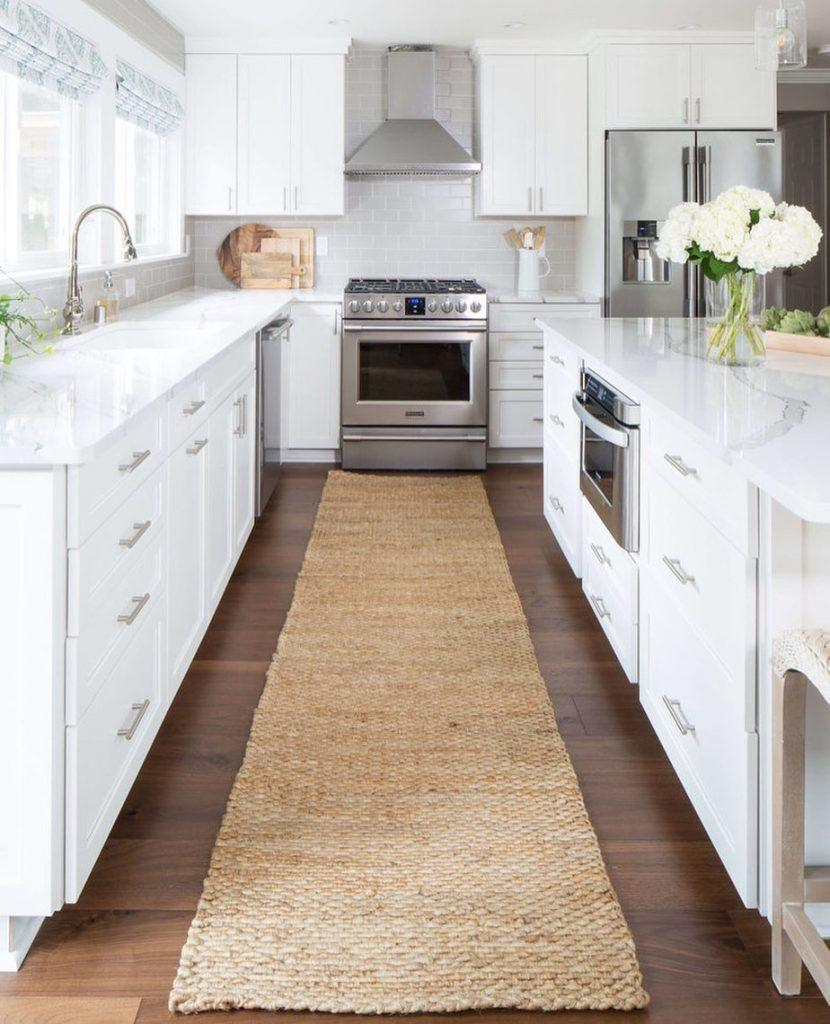
Natural fiber rugs can bring texture and warmth into a kitchen without relying on strong colors. I like jute-inspired and woven designs because they work nicely with wood cabinets, neutral walls, greenery, and simple ceramic accessories. Their natural appearance can make modern kitchens feel softer and farmhouse kitchens feel even more comfortable.
Before choosing one, consider how much moisture and food activity the area receives, since some natural fibers require more care than washable synthetic options. Used in a suitable spot, a textured natural rug can give the kitchen a relaxed and organic character.
17. Runner Rug In Front Of The Island

The space between an island and the main cabinets is often perfect for a runner. I like this placement because it naturally follows the kitchen’s main working zone while adding comfort underfoot. A runner can visually define the area and make a large kitchen feel more layered.
Choose a size that leaves enough flooring visible around the edges so the rug does not look cramped. Patterned designs work well with plain cabinets, while neutral runners can complement kitchens that already have strong colors. This placement is practical, decorative, and especially useful for long kitchen layouts.
18. Checkered Kitchen Rug

A checkered rug can give a kitchen a playful yet timeless appearance. Black and white checks create a classic look, while beige and cream combinations feel softer and more relaxed. I also like colored checks in shades such as green, blue, or terracotta for kitchens that need more personality.
A checkered rug works especially well with simple cabinets because the pattern becomes an attractive focal point. If you already have checkerboard flooring, choose another rug pattern to avoid repetition. Used carefully, this design can make the kitchen feel stylish, cheerful, and visually interesting.
19. Minimalist Kitchen Rug

A minimalist rug is ideal if you prefer a clean and uncluttered kitchen. I would choose a simple solid color, subtle stripe, or understated geometric pattern that complements the cabinets without demanding attention.
Soft gray, beige, cream, taupe, and muted brown are easy choices for a calm look. A minimalist rug can still add important texture and warmth, especially in kitchens with tile, stone, or polished flooring. Keep the shape and size proportional to the room so everything feels balanced. This approach proves that a rug does not need a bold pattern to make a noticeable difference.
A kitchen rug is one of the easiest decorating additions I can recommend when a space needs more warmth and character. It can soften hard flooring, introduce color, create visual balance, and make busy areas more comfortable. I especially like using runners near cabinets, small rugs beside the sink, and patterned designs in kitchens with simple finishes.
Practical details matter too, so washable materials and non-slip backing can make everyday use much easier. Start with the area you want to improve, then choose a rug that suits your kitchen’s colors and layout. A thoughtful rug can make the entire space feel warmer, more comfortable, and complete.