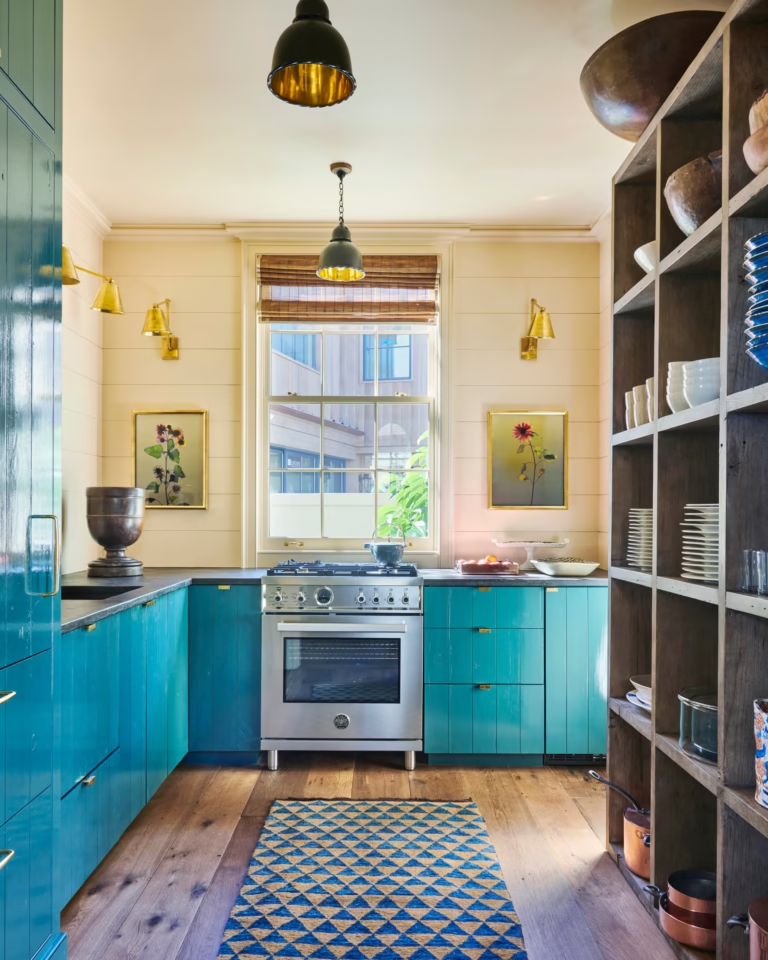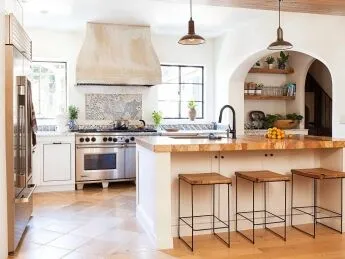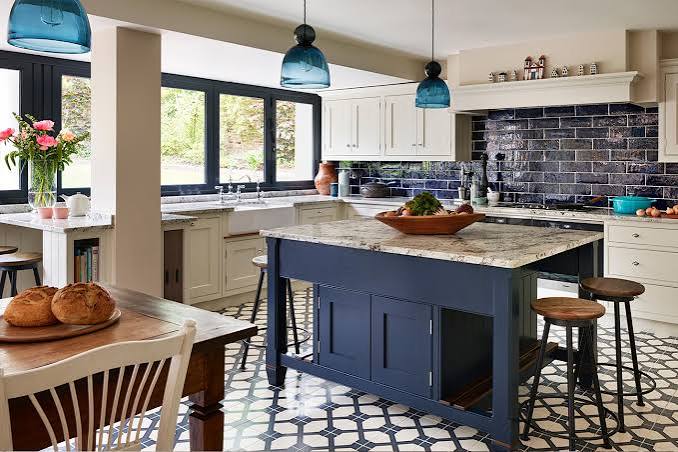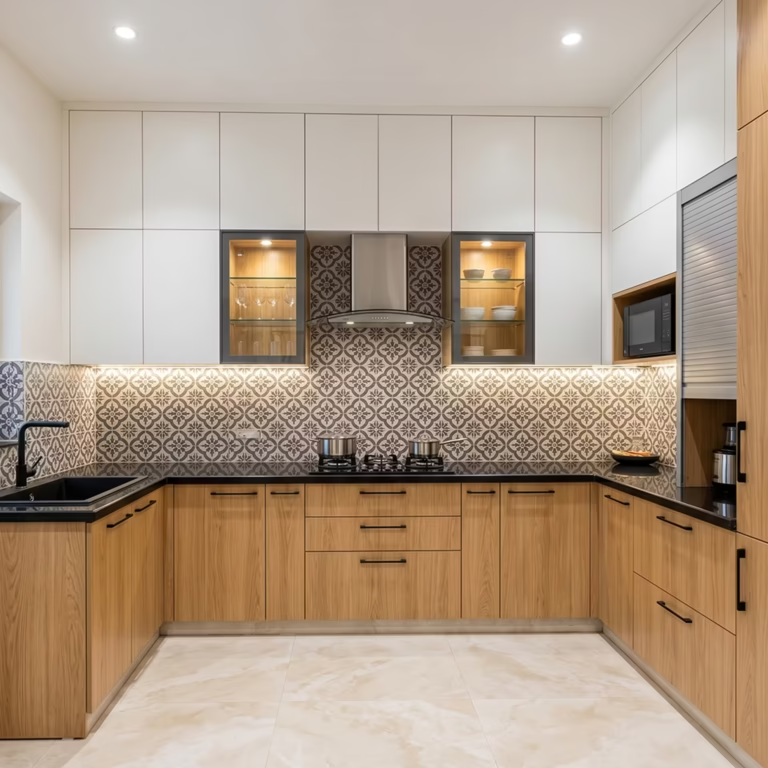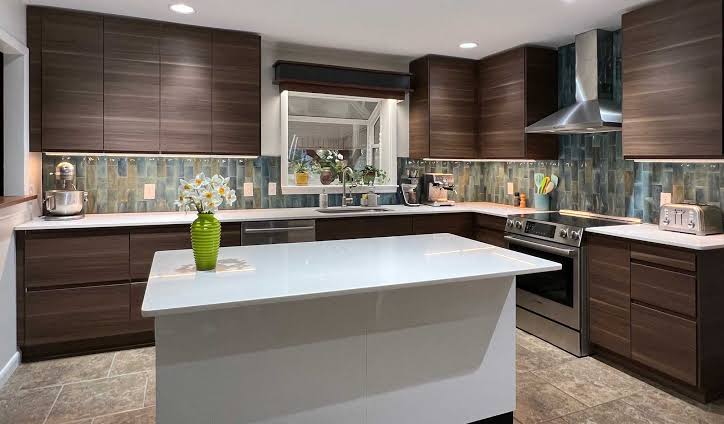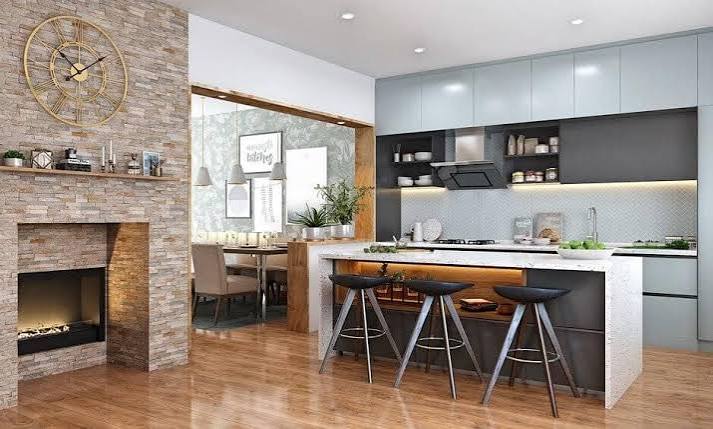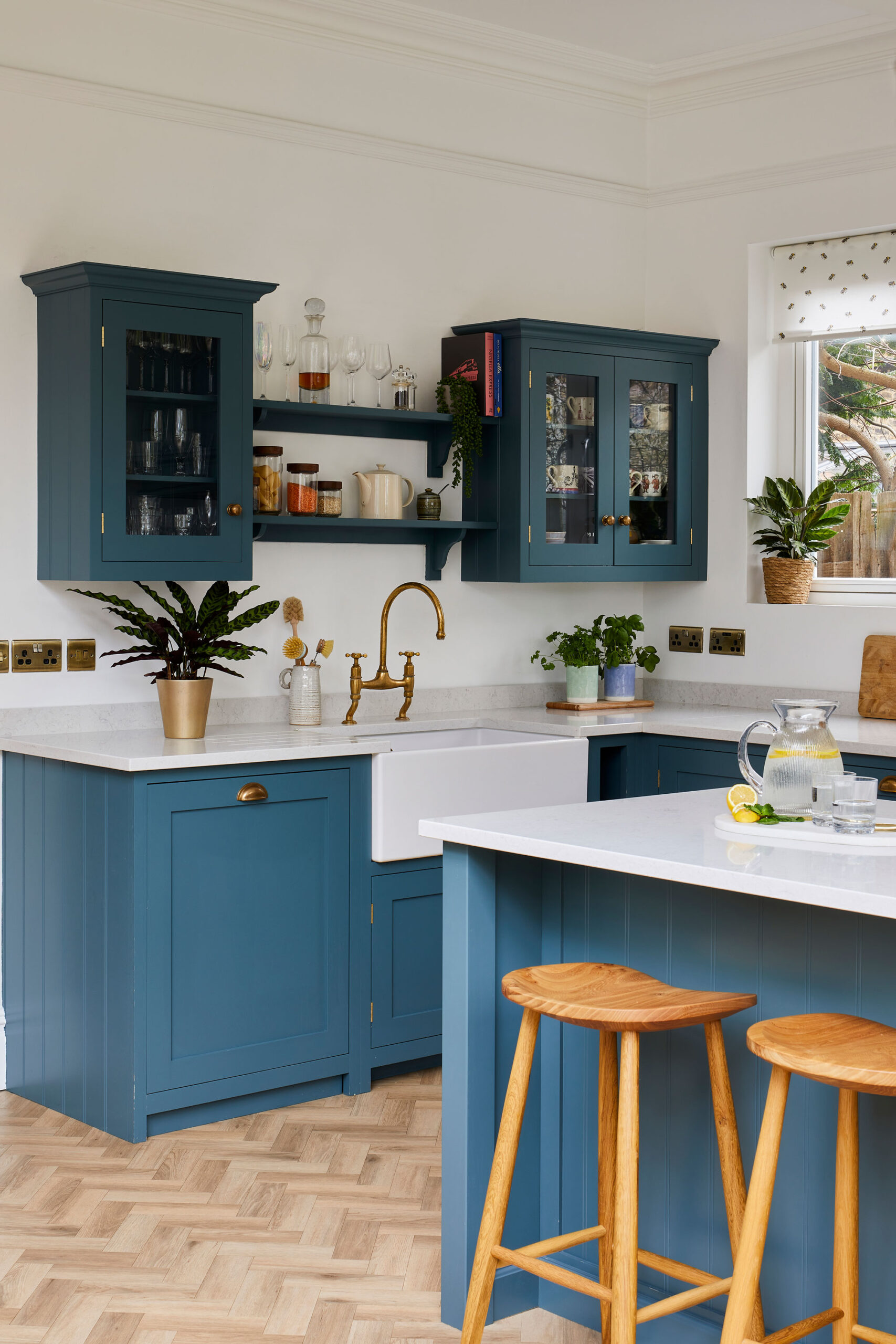
Blue kitchens offer a beautiful balance of character, calmness, and timeless style. This versatile color can create anything, such as a soft coastal atmosphere, a sophisticated contemporary space, or a dramatic kitchen filled with personality. Different shades of blue also work beautifully with white, wood, brass, marble, black, and natural stone. You can introduce blue through cabinets, islands, backsplashes, walls, appliances, or smaller decorative accents.
The key is choosing a shade and combination that complements your kitchen’s size, lighting, and overall aesthetic. Explore these 23 blue kitchen ideas to create a space that feels stylish, welcoming, practical, and uniquely yours.
1. Navy Blue Kitchen Cabinets

Navy blue cabinets can instantly give a kitchen a sophisticated and timeless appearance. This deep shade works especially well with white countertops, warm wood flooring, marble surfaces, and metallic hardware. For a modern look, choose flat-panel cabinet doors with simple handles. Shaker-style cabinets can create a more traditional or transitional feel.
If the kitchen receives plenty of natural light, navy cabinetry can look rich without making the room feel overly dark. Pairing the lower cabinets with lighter upper cabinets is another excellent option for maintaining visual openness. Add warm lighting to make the deep blue tones feel inviting.
2. Blue and White Kitchen

Blue and white create one of the most timeless kitchen color combinations. Crisp white surfaces can balance the richness of blue cabinetry, creating a space that feels bright and welcoming. Try blue lower cabinets with white upper cabinets, or use blue throughout the cabinetry against a white backsplash.
Marble-look countertops can enhance the sophisticated appearance while maintaining the light color palette. Wooden cutting boards, woven baskets, and natural accessories can introduce warmth. This combination works across many interior styles, including coastal, farmhouse, traditional, and contemporary kitchens. Choose pale blue for softness or navy for a stronger visual statement.
3. Light Blue Kitchen Cabinets

Light blue cabinets can make a kitchen feel airy, peaceful, and inviting. Shades such as powder blue, sky blue, and dusty blue work beautifully in spaces that receive plenty of natural light. Pair the cabinets with white countertops and backsplashes for a fresh appearance, or introduce light oak accents for warmth. Brushed brass hardware can create an elegant contrast, while matte black handles offer a more contemporary look.
Light blue is particularly effective in smaller kitchens because it provides color without creating the visual heaviness associated with darker shades. Add simple decorative accessories to keep the overall space feeling fresh.
4. Blue Kitchen Island

A blue kitchen island can become the focal point of an otherwise neutral kitchen. Instead of committing to blue cabinetry throughout the room, paint just the island in navy, teal, dusty blue, or another favorite shade. This approach adds personality while keeping the surrounding space visually light. A contrasting countertop can further emphasize the island, while pendant lights above it can create a defined gathering area.
Blue islands work particularly well with white, cream, gray, and natural wood kitchens. Add comfortable stools underneath if space allows, turning the island into a practical spot for breakfast, casual meals, conversations, or everyday work.
5. Coastal Blue Kitchen

A coastal blue kitchen can create a relaxed atmosphere inspired by the colors of the sea and sky. Soft blue cabinetry paired with white walls, light wood, natural textures, and simple hardware can establish an effortless beach-inspired aesthetic. Consider incorporating woven pendant lights, rattan stools, linen accessories, or subtle nautical artwork. Avoid using too many themed decorations so the room remains sophisticated rather than overly literal.
Pale blue subway tiles can also reinforce the coastal feeling without overwhelming the space. This style works beautifully in bright kitchens where natural sunlight can enhance the soft blue tones and make the room feel fresh.
6. Blue Shaker Cabinets

Blue Shaker cabinets combine classic cabinetry details with a modern color choice. The simple recessed-panel design provides enough visual interest to complement rich shades such as navy, slate, or deep blue. Pair the cabinets with quartz countertops, white tile, wood flooring, or brass hardware to create a balanced interior. For a farmhouse-inspired kitchen, consider a muted blue with natural wood accents.
In a contemporary setting, deeper blue paired with sleek lighting can look sophisticated. Shaker cabinetry is versatile enough to work across multiple design styles, making it an excellent choice if you want a blue kitchen that remains appealing as trends evolve.
7. Blue and Wood Kitchen

Combining blue with natural wood creates a warm and balanced kitchen. Blue cabinetry provides color and personality, while wooden shelves, flooring, island details, or ceiling accents introduce organic warmth. Light oak works particularly well with navy and dusty blue because it prevents darker shades from feeling too heavy. Walnut can create a richer, more dramatic appearance. Keep the rest of the finishes relatively simple so the combination remains cohesive.
White countertops can provide another layer of brightness. This pairing works beautifully in modern, Scandinavian, transitional, and farmhouse interiors where natural materials are an important part of the overall design.
8. Blue Subway Tile Backsplash

A blue subway tile backsplash is an easy way to introduce color without changing the entire kitchen. Classic rectangular tiles can be arranged horizontally, vertically, or in a herringbone pattern for different visual effects. Soft blue creates a calm appearance, while deep navy or teal makes the backsplash more dramatic. Pair the tiles with white cabinets for contrast or blue cabinets in a slightly different tone for a layered monochromatic design.
Grout color also matters; white grout creates a crisp look, while darker grout emphasizes the tile pattern. This idea works beautifully in both traditional and contemporary kitchens.
9. Moody Dark Blue Kitchen

A moody dark blue kitchen creates a dramatic and sophisticated atmosphere. Deep navy, midnight blue, and blue-black shades can give cabinetry a luxurious appearance, particularly when paired with stone countertops and statement lighting.
Metallic hardware in brass or copper can add warmth and contrast. Good lighting is important because darker colors can absorb visual brightness. Combine ceiling fixtures, pendant lights, and under-cabinet illumination to keep work areas practical. Wooden accessories or flooring can soften the overall palette. This style is particularly striking in larger kitchens, but carefully balanced lighting and lighter countertops can also make it work beautifully in compact spaces.
10. Blue Kitchen With Brass Hardware

Blue cabinetry paired with brass hardware creates an elegant and eye-catching combination. Warm brass handles, knobs, faucets, and lighting fixtures stand out beautifully against navy, cobalt, or muted blue cabinets. Choose a consistent finish across the kitchen to create visual cohesion. If you want a modern appearance, select simple linear handles.
Rounded knobs and cup pulls can give Shaker cabinetry a more traditional character. White or cream countertops help balance the strong color contrast. Wooden accents can add additional warmth without competing with the blue and brass pairing. This combination is ideal for creating a kitchen that feels polished yet welcoming.
11. Blue Farmhouse Kitchen

Blue can bring beautiful personality to a farmhouse-style kitchen. Choose muted navy, dusty blue, slate, or soft denim shades for cabinetry, then combine them with natural wood, white surfaces, apron-front sinks, and simple hardware. Open shelves can display ceramic dishes and rustic kitchen accessories while adding warmth. Wooden beams or butcher-block countertops can reinforce the farmhouse character.
Keep decorative elements practical and understated so the space remains functional. A blue farmhouse kitchen can feel cozy without becoming overly traditional, especially when contemporary lighting and streamlined appliances are incorporated into the design.
12. Two-Tone Blue Kitchen Cabinets

Using two shades of blue can create depth and personality within a kitchen. Consider pairing pale blue upper cabinets with navy lower cabinets or using a medium blue island against darker cabinetry. Another approach is combining blue cabinets with natural wood cabinetry for a more varied material palette. Keep countertops and backsplashes relatively neutral so the colors remain the primary focus.
This strategy can also help visually separate different areas within an open-plan kitchen. Choose shades with similar undertones so the combination feels intentional rather than mismatched. Two-tone cabinetry is particularly effective in contemporary and transitional kitchen designs.
13. Blue Kitchen With Marble Countertops

Blue cabinetry and marble countertops create a sophisticated kitchen combination with plenty of visual contrast. White or light marble can brighten deep blue cabinets while adding natural veining and texture. If genuine marble is not suitable for your needs, similar visual effects can be achieved with other countertop materials featuring marble-inspired patterns. Keep hardware relatively simple so the cabinetry and countertop remain the main features.
Brass fixtures can add warmth, while black hardware creates a sharper contemporary appearance. This pairing works particularly well in kitchens aiming for an elegant, refined atmosphere without relying on excessive decoration.
14. Blue Kitchen With Black Accents

Blue and black can create a bold modern kitchen with strong visual definition. Navy cabinets paired with matte black handles, faucets, lighting, and stools can produce a sleek contemporary aesthetic. To prevent the combination from feeling too dark, introduce white or light-colored countertops and maintain plenty of task lighting. Natural wood accessories can soften the contrast and add warmth.
This palette works especially well in kitchens featuring clean lines and minimal decoration. For a more dramatic appearance, use deep blue cabinetry throughout the space. For a lighter effect, limit blue to the island or lower cabinets and keep surrounding surfaces neutral.
15. Blue Pantry Cabinet

A blue pantry cabinet can turn an ordinary storage feature into a stylish focal point. Choose a tall cabinet in navy, slate, or muted blue and use it to organize dry ingredients, small appliances, serving pieces, or kitchen supplies. Adjustable shelves and pull-out drawers can make the interior more functional. If the rest of your kitchen is neutral, the blue cabinet can provide a welcome splash of color.
Matching the pantry shade with an island or smaller cabinet section can create continuity. This approach allows you to experiment with blue without committing to an entire kitchen renovation.
16. Blue Kitchen With Open Shelving

Open shelving can complement blue kitchen cabinets while adding warmth and practical display space. Natural wood shelves look especially attractive against navy or medium-blue cabinetry because the two materials create a balanced contrast. Use the shelves for everyday dishes, glassware, cookbooks, plants, or decorative ceramics. Avoid overcrowding the shelves so the kitchen retains a clean appearance. Brass brackets can introduce subtle metallic detail, while hidden mounting creates a more minimalist look.
This combination works well in modern farmhouse, Scandinavian, transitional, and contemporary kitchens. It also provides an opportunity to display favorite items instead of keeping everything behind closed cabinet doors.
17. Blue Kitchen With Gold Lighting

Gold or warm metallic lighting can make a blue kitchen feel instantly more sophisticated. Pendant lights above an island are particularly effective because they draw attention to the central workspace while introducing a decorative element. Navy cabinets provide a rich backdrop for warm gold finishes, creating an elegant contrast. Choose fixtures with clean shapes for a modern kitchen or more decorative forms for a traditional space. Keep other metallic details coordinated so the room feels cohesive.
Light countertops, natural wood, and neutral walls can help balance the deeper blue and warm metallic tones, creating an inviting yet refined atmosphere.
18. Small Blue Kitchen
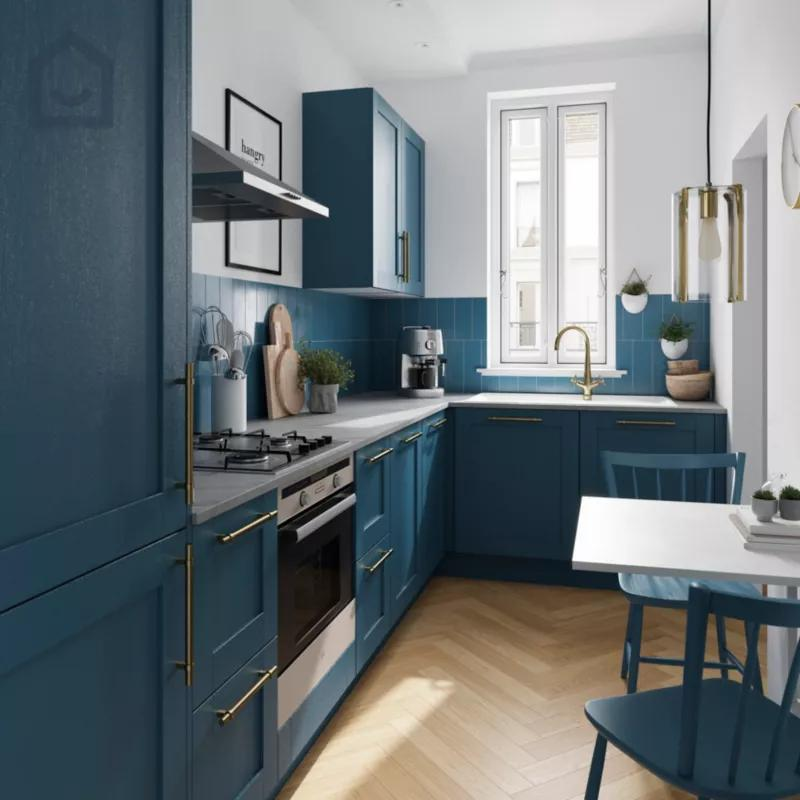
Blue can work beautifully in a small kitchen when used thoughtfully. Lighter shades can help maintain an airy appearance, while darker blue can create a dramatic focal point when balanced with white walls and countertops. Consider using blue only on the lower cabinets or a compact island while keeping upper storage light. Reflective surfaces, glass doors, and good lighting can also help the room feel more spacious. Keep hardware simple and minimize countertop clutter to preserve visual openness.
A small blue kitchen does not need to feel overwhelming; careful color placement can actually make the space feel more distinctive and intentional.
19. Blue Kitchen With Patterned Flooring

Patterned flooring can add personality to a blue kitchen while creating another layer of visual interest. Geometric tiles, encaustic-inspired patterns, or subtle blue-and-white designs can complement blue cabinetry beautifully. If the cabinets are dark, consider a lighter floor pattern to maintain balance. In kitchens with pale blue cabinets, a stronger patterned floor can provide contrast and definition.
Keep other surfaces relatively simple so the floor does not compete with too many decorative elements. This idea works particularly well in eclectic, Mediterranean, farmhouse, and contemporary kitchens where flooring is treated as an important design feature.
20. Blue Kitchen With Natural Stone

Natural stone can give a blue kitchen an earthy and sophisticated character. Stone countertops or backsplashes featuring organic patterns can soften the uniform appearance of painted cabinetry. Choose blue shades that complement the natural tones within the stone rather than competing with them.
Warm beige, cream, gray, and earthy stone colors can all pair beautifully with blue. Wooden cutting boards, woven accessories, and simple ceramics can reinforce the natural aesthetic. This approach works particularly well for homeowners who want a kitchen that feels luxurious yet grounded. Let the stone provide texture while keeping cabinetry and accessories relatively streamlined.
21. Blue Kitchen With a Statement Hood

A statement range hood can become an unexpected focal point in a blue kitchen. Consider painting the hood the same shade as the cabinetry for a seamless appearance, or choose a contrasting blue to make it stand out. Decorative plaster, wood, metal, or tile can further emphasize the structure. Pair the hood with a simple backsplash so the area does not feel overly busy.
A statement hood works particularly well above a kitchen range positioned along a prominent wall. It combines practical ventilation with strong visual impact, giving the kitchen a custom-designed appearance while reinforcing the overall blue color story.
22. Blue Kitchen With Brass and Wood

Blue, brass, and wood create a warm and sophisticated combination that can make a kitchen feel both modern and inviting. Deep blue cabinetry provides a strong base, while natural wood introduces organic texture and warmth. Brass handles, faucets, or pendant lights add a refined metallic accent. Keep the countertop neutral to allow these three elements to work together without creating too much visual competition.
Light oak creates a brighter Scandinavian-inspired effect, while darker wood produces a more luxurious atmosphere. This palette is versatile enough for contemporary, transitional, modern farmhouse, and classic kitchen interiors.
23. Elegant Blue and Cream Kitchen

Blue and cream create a softer alternative to the classic blue-and-white kitchen. Warm cream cabinets, walls, countertops, or backsplashes can balance rich blue cabinetry and make the room feel comfortable rather than stark.
Navy works especially well with creamy tones, while muted blue creates a more relaxed appearance. Add natural wood, brushed brass, or woven accessories to reinforce the warmth. Cream-colored lighting can also enhance the inviting atmosphere during the evening. This combination suits traditional, transitional, coastal, and contemporary interiors and offers an elegant color palette that can remain attractive for years.
Blue can transform a kitchen into a space that feels stylish, welcoming, and full of personality. Deep navy creates drama, pale blue offers softness, and brighter shades bring playful energy. You can introduce this versatile color through cabinets, islands, backsplashes, walls, pantry units, or carefully chosen accessories. Pairing blue with natural wood, marble-inspired surfaces, brass, black, cream, or white can create striking visual balance.
Think about your kitchen’s lighting, size, layout, and existing finishes before selecting your ideal shade. With thoughtful planning, blue can provide both visual character and everyday functionality, creating a kitchen that feels fresh, comfortable, practical, and beautifully designed.