A kitchen backsplash can completely change the personality of your cooking space. It protects the wall behind busy areas while also giving you an opportunity to introduce color, texture, pattern, or natural character. I love how a thoughtfully chosen backsplash can make simple cabinets look more interesting and give the entire kitchen a finished appearance. You can keep things subtle with neutral tile or create a dramatic focal point with bold stone, colorful patterns, or unexpected materials.
The key is finding a design that works with your cabinets, countertops, lighting, and everyday routine. Here are some unique kitchen backsplash ideas to help you create a kitchen you’ll love.
1. Handmade Zellige Tile Backsplash

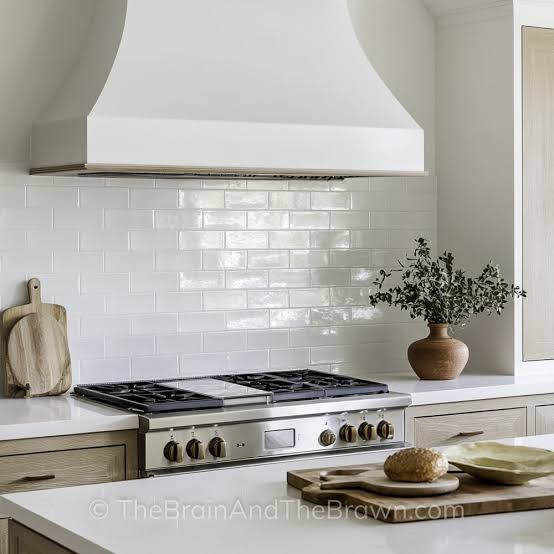
Handmade zellige-style tiles can give a kitchen backsplash a beautiful sense of movement and character. Their slightly uneven surfaces and varied tones create subtle texture that looks different as light changes throughout the day. I especially like these tiles in white, cream, soft green, or muted blue because they add interest without making the kitchen feel overwhelming.
Pair them with simple cabinetry and natural wood accents for a relaxed look. Brass hardware can also complement the warm variation in the tiles. This backsplash style works particularly well when you want your kitchen to feel handcrafted rather than overly uniform.
2. Bold Green Tile Backsplash

A green tile backsplash can bring an earthy and refreshing feeling into the kitchen. Deep emerald, olive, sage, and forest green can each create a different atmosphere, so there is plenty of room to match your decorating style. I like pairing green tile with cream cabinets or warm natural wood because these combinations feel inviting and connected to nature. If the cabinets are already colorful, choose a softer green with less visual intensity.
Glossy tiles can reflect light and add brightness, while matte tiles create a quieter appearance. A green backsplash can become a memorable feature without requiring a complete kitchen renovation.
3. Marble Slab Backsplash

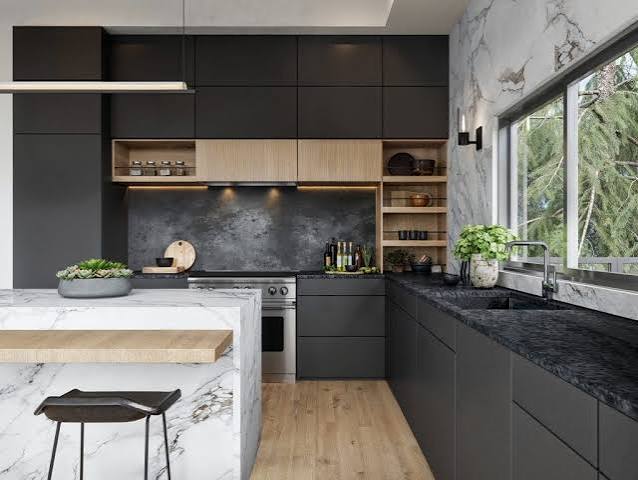
A marble slab backsplash can create an elegant and seamless appearance behind the kitchen countertop. Instead of numerous grout lines, a large slab allows the natural veining to become the main visual feature. I love this approach when the cabinets are simple because the stone can provide plenty of character without additional decoration.
White marble with gray veining works beautifully with white, charcoal, navy, and green cabinets. You can also coordinate the slab with the countertop for a continuous appearance. If natural marble does not suit your maintenance preferences, marble-look surfaces can provide a similar visual direction with other material options.
4. Black Subway Tile Backsplash

Black subway tiles can give a kitchen a dramatic yet familiar appearance. Their traditional shape becomes much more striking when presented in a deep black finish. I like pairing black tiles with white or light-colored cabinets because the contrast creates a strong focal point behind the cooking area. Warm wood can soften the darker surface and prevent the kitchen from feeling too severe.
Choose glossy black tiles if you want reflected light and a slightly brighter effect, or matte tiles for a more understated finish. Simple grout choices can also change the overall appearance, so consider the visual effect you want before installation.
5. Terracotta Tile Backsplash

Terracotta tiles can introduce warmth and earthy character into a kitchen. Their natural reddish and brown tones work beautifully with cream cabinets, wood, brass, and other warm materials.
I particularly like this backsplash idea for kitchens with rustic, Mediterranean, cottage, or organic influences. You can use traditional square tiles for a classic appearance or explore interesting shapes for a more contemporary look. Keep the countertop relatively simple so the warm tile remains noticeable without competing with too many patterns. A few ceramic accessories, woven pieces, or wooden cutting boards can reinforce the natural feeling and create a cohesive kitchen design.
6. Geometric Tile Backsplash

A geometric tile backsplash can add energy and personality to an otherwise simple kitchen. Hexagons, diamonds, triangles, elongated shapes, and other patterns can create a distinctive wall without requiring dramatic cabinetry. I like using geometric tiles in a restrained color palette so the pattern becomes interesting without making the room feel chaotic.
Neutral black, white, gray, beige, or soft blue combinations can work particularly well. If your countertop already has strong veining or patterns, choose a quieter geometric design. The backsplash can then provide visual interest while allowing the other major surfaces to remain balanced and easy on the eyes.
7. Blue And White Backsplash

Blue and white tiles can create a fresh and timeless kitchen backsplash. Navy, cobalt, powder blue, or muted blue can each produce a different mood when paired with a white background. I like this combination because it works with both traditional and contemporary kitchens.
Patterned blue-and-white tiles can create a decorative focal point, while simple subway or square tiles offer a cleaner appearance. Natural wood accessories can warm the color combination, while brass hardware can add a little sophistication. If you want a backsplash that feels cheerful without relying on many different colors, blue and white is a beautiful direction to explore.
8. Vertical Stack Tile Backsplash

Changing the orientation of a familiar tile can completely alter the look of a kitchen backsplash. Vertically stacked tiles create clean lines that can visually emphasize the height of the wall. I like this approach with narrow rectangular tiles in white, cream, gray, or soft green. The straightforward pattern feels modern while remaining relatively simple. Pairing vertical tiles with minimal cabinets can create a polished appearance, while wood accents can soften the overall design.
This arrangement is particularly useful if you want something different than the standard horizontal subway pattern but still prefer a backsplash that does not dominate the kitchen.
9. Herringbone Backsplash

A herringbone backsplash can add movement to the kitchen while using a relatively familiar tile shape. The angled arrangement creates a subtle pattern that can make the wall more visually interesting. I especially like white or soft neutral tiles arranged in a herringbone pattern because they add texture without introducing a strong new color.
Dark grout can emphasize the pattern, while matching grout creates a softer appearance. Keep the countertop and cabinetry fairly simple if you want the herringbone design to stand out. This backsplash can work beautifully in farmhouse, transitional, contemporary, and classic kitchen interiors.
10. Exposed Brick Backsplash

An exposed brick backsplash can bring texture and an architectural quality into the kitchen. The natural variation in brick gives the cooking area a warm, lived-in character that works particularly well with industrial, rustic, farmhouse, and loft-inspired designs. I like combining brick with simple cabinets so the textured wall remains a strong feature.
White-painted brick can create a lighter appearance if traditional red brick feels too heavy. Wooden shelves and black metal fixtures can complement the material nicely. If using real brick around cooking areas, consider an appropriate finish and installation method suited to kitchen conditions and cleaning requirements.
11. Terrazzo Backsplash
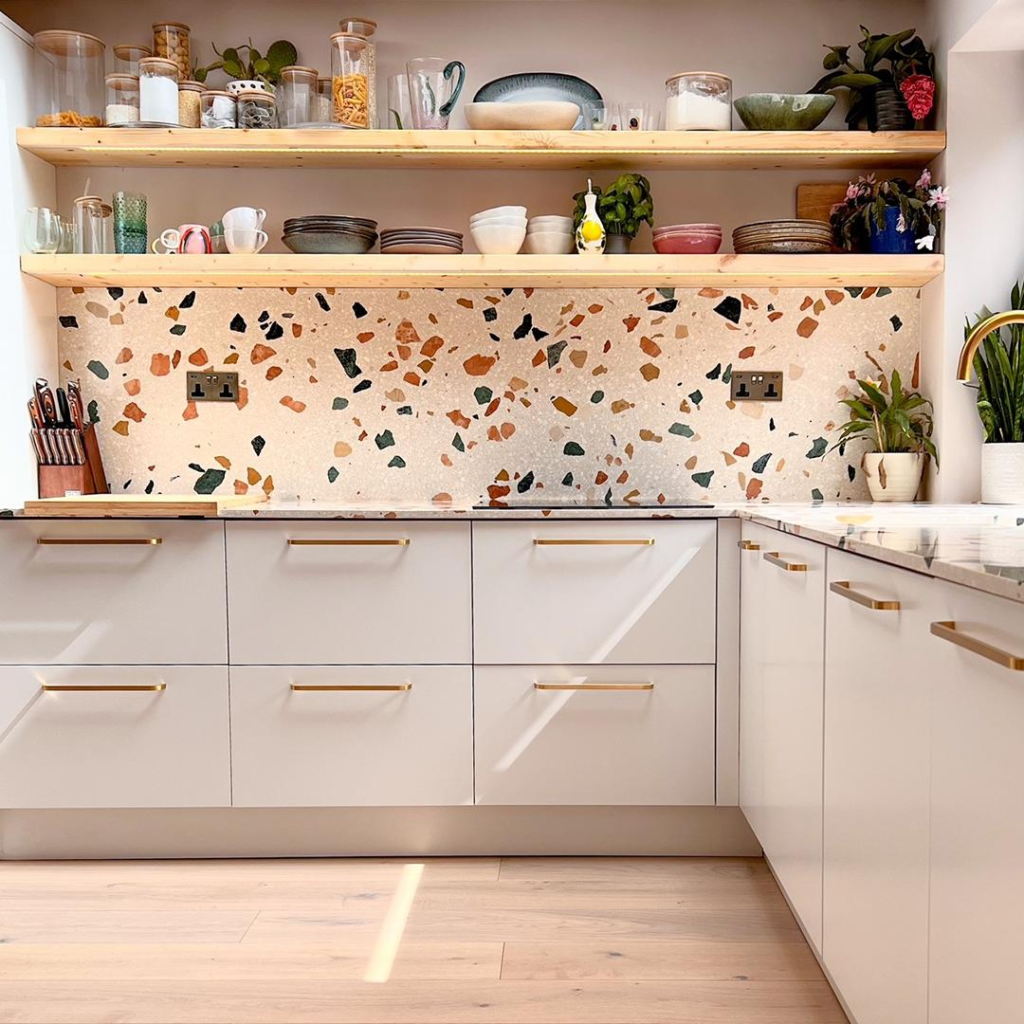
Terrazzo can give a kitchen backsplash a playful and distinctive appearance through its scattered chips and varied surface pattern. It is a good option if you want more personality than a plain tile can provide. I like neutral terrazzo with small touches of black, brown, green, or warm tones because it can connect several colors within the kitchen.
Choose a countertop that does not compete heavily with the terrazzo pattern. Simple cabinetry can help the backsplash become the main decorative feature. This material-inspired look works particularly well in contemporary kitchens that need texture without relying on traditional decorative tiles.
12. Brass Metal Backsplash
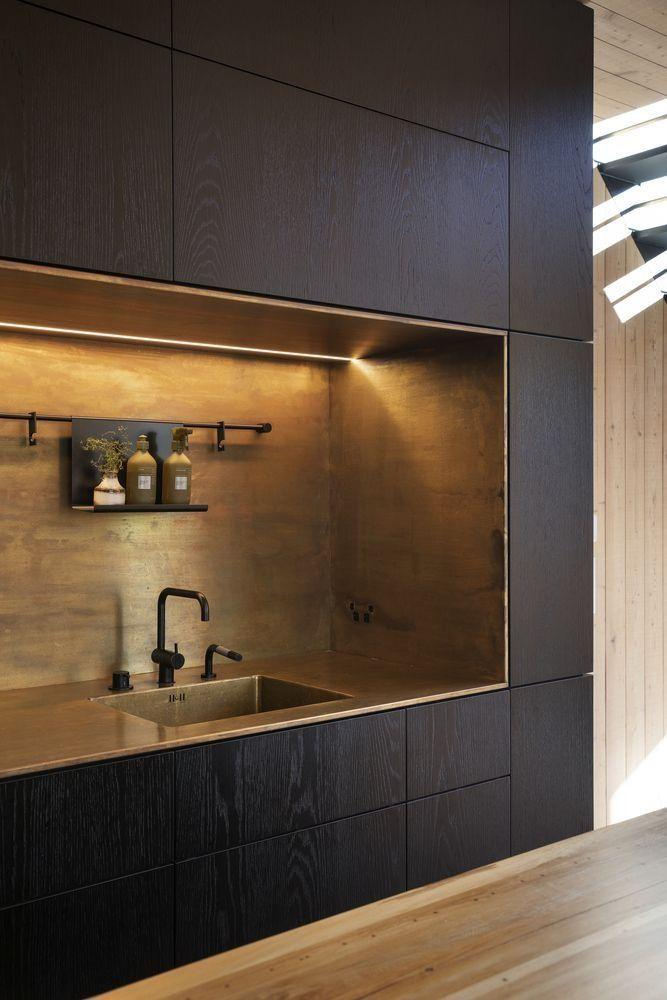
A brass backsplash can create a warm, eye-catching focal point behind the cooking area. Its golden tone works beautifully with cream, white, navy, green, and dark cabinetry.
I like using brass when the kitchen needs a little warmth and visual contrast without adding another strong color. A brushed finish can create a softer appearance, while polished brass produces more reflection. Keep the rest of the metallic details coordinated so the design feels intentional. Brass can work especially well in kitchens with traditional, vintage, eclectic, or sophisticated styling. It is a distinctive choice for homeowners who want the backsplash to feel like a decorative feature.
13. Natural Stone Backsplash

Natural stone can give the backsplash an earthy and substantial appearance. Depending on the stone, you can achieve anything between soft and elegant or rustic and heavily textured. I like pairing natural stone with wood cabinets because the combination creates a strong connection to organic materials. Neutral stone works particularly well when you want the backsplash to remain timeless. A textured stone can become the main feature, so keeping nearby surfaces simple is helpful.
Consider the cleaning and sealing requirements associated with your chosen stone, especially in areas close to the cooktop. The right stone can add lasting character to the kitchen.
14. Floral Patterned Backsplash

A floral patterned backsplash can introduce charm and personality into the kitchen. This idea works especially well in cottage, vintage, English-inspired, and eclectic interiors where decorative patterns are welcome. I like choosing a floral tile with two or three main colors and repeating one of those shades elsewhere in the kitchen. Soft blue, green, cream, and muted pink can create a gentle appearance, while darker backgrounds can make the design feel more dramatic.
Keep cabinets relatively simple so the backsplash remains easy to appreciate. A decorative backsplash can turn an ordinary cooking wall into a feature that feels personal and memorable.
15. Fish Scale Tile Backsplash

Fish scale or scallop-shaped tiles can give a kitchen backsplash a softer and more decorative appearance. Their curved edges introduce movement while creating a pattern that feels different than standard rectangular tile. I like using pale blue, green, white, or neutral shades for this design because the shape itself provides plenty of visual interest. Metallic hardware can complement the curved pattern, while natural wood can keep the overall look relaxed.
If you have colorful cabinets, a neutral fish scale backsplash can prevent the room from becoming too busy. This is a fun option when you want a backsplash that feels distinctive without being overly complicated.
16. Checkerboard Backsplash

A checkerboard backsplash can create an instantly recognizable visual feature in the kitchen. The classic black-and-white combination provides strong contrast, while softer shades such as cream and beige can create a more relaxed interpretation. I like using checkerboard tile when the cabinets are simple and the rest of the kitchen needs a little extra personality.
Keep other patterns limited so the backsplash remains the main decorative element. You can also repeat one of the tile colors through stools, hardware, or small accessories. This design can work in retro, modern, eclectic, and contemporary kitchens depending on the surrounding materials.
17. Wood Backsplash
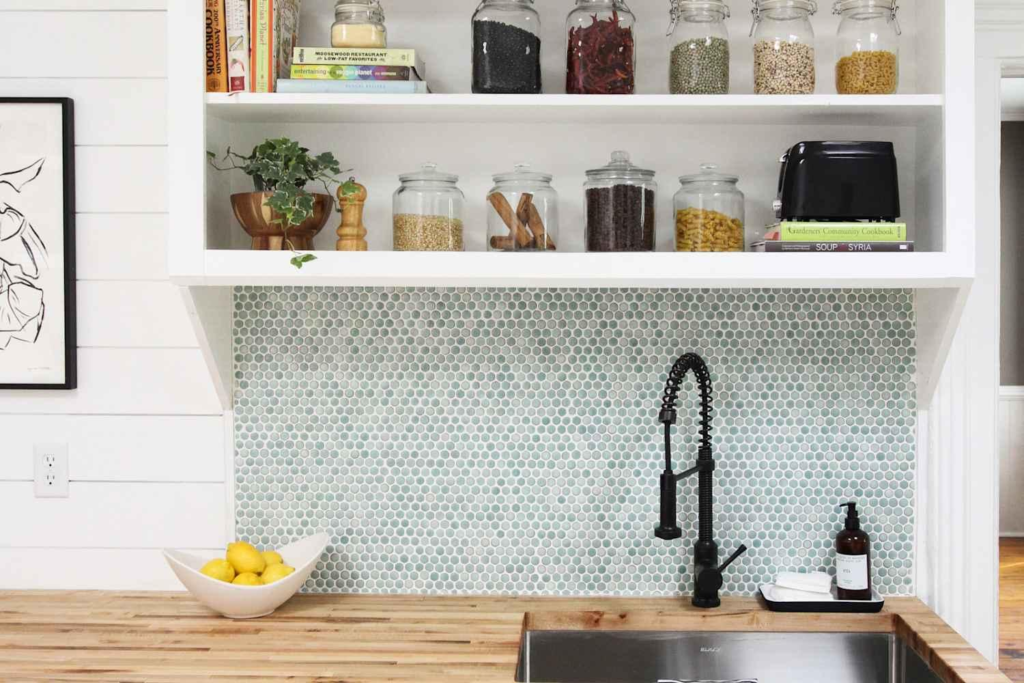
A wood backsplash can introduce warmth and natural texture into the kitchen. It can be especially attractive when the cabinets and countertops use cooler colors such as white, gray, or muted green. I like the way wood can make a contemporary kitchen feel more comfortable and less sterile.
Vertical or horizontal wood panels can create different visual effects, while a natural finish highlights the grain. Since kitchen backsplashes are exposed to moisture, heat, and food splashes, choose an appropriate material and finish for the specific location. When thoughtfully installed, wood can create a beautiful and distinctive backdrop.
18. Penny Tile Backsplash

Penny tiles can give a kitchen backsplash a charming textured appearance using small circular tiles arranged closely together. Classic white penny tile feels fresh and timeless, while black, gray, green, or mixed colors can create a more distinctive look. I like this option because the small scale of the tile adds detail without requiring an elaborate pattern. Dark grout can emphasize each individual shape, while matching grout creates a more seamless effect.
Penny tile works nicely in vintage, traditional, cottage, and modern kitchens. It can also be used as a smaller accent area behind the range if you prefer a more subtle application.
19. Mirror Backsplash
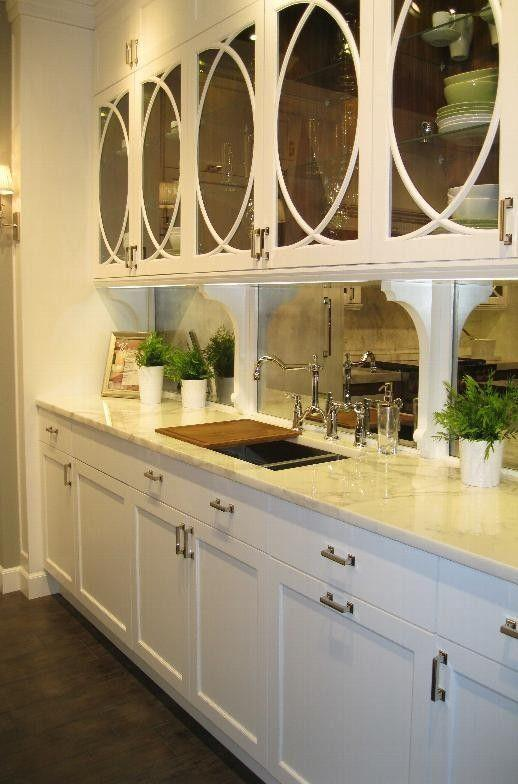
A mirrored backsplash can make a kitchen feel brighter and visually more spacious because it reflects light and surrounding surfaces. Antique mirror panels can provide a softer, more characterful appearance, while clear mirrored surfaces create a crisp contemporary effect. I like this idea for compact kitchens where adding visual depth can make a noticeable difference.
Pair the reflective surface with simple cabinetry and restrained accessories so the room does not feel too busy. Metallic hardware can complement the reflective quality, while wood accents can add warmth. If you choose this approach, consider how easy the surface will be to clean in your cooking area.
20. Bold Patterned Cement Tile Backsplash

Patterned cement tiles can turn a backsplash into a major decorative statement. Their bold motifs can introduce color and personality while giving the kitchen a handcrafted appearance. I like using them behind a range or along one focused wall so the pattern has room to stand out.
Neutral cabinets can provide a calm background, while one color within the tile pattern can be repeated through accessories or seating. Since cement-style tiles can have specific care requirements, check the recommended sealing and maintenance instructions before installation. With the right surrounding palette, a patterned backsplash can become the feature that makes the kitchen memorable.
A kitchen backsplash gives you an easy opportunity to add personality while protecting an important working wall. I love how small changes in tile shape, color, material, and arrangement can create completely different moods. You can choose natural stone for an elegant appearance, handmade tiles for character, bold patterns for personality, or simple neutral surfaces for a calmer kitchen.
Think about your cabinets, countertops, lighting, cleaning routine, and overall decorating style before settling on a design. The most successful backsplash usually feels connected to the rest of the room. These ideas can help you experiment with different looks and create a kitchen that feels beautiful, practical, and uniquely yours.