A dark kitchen can feel dramatic, cozy, elegant, and surprisingly welcoming when the right colors and materials work together. I love how deep shades can give a kitchen more personality while creating a strong backdrop for wood, stone, metal, and warm lighting. Dark cabinetry does not always mean a room will feel small or gloomy. Good lighting, reflective surfaces, natural textures, and thoughtful accents can keep the space balanced.
In this article, I’m sharing dark kitchen ideas that combine visual appeal with practical details. These designs can help you create a comfortable cooking space that feels stylish, modern, and inviting.
1. Matte Black Kitchen Cabinets

Matte black cabinets can give a kitchen a sophisticated and dramatic appearance without looking overly glossy. I especially like this finish because it creates a smooth, understated backdrop for natural wood, marble, and metallic details. You can use black across all cabinets or limit it to the lower units for a lighter appearance.
Warm pendant lighting can soften the darker cabinetry, while brass or wood hardware adds contrast. If the kitchen receives plenty of natural light, black cabinets can look especially striking during the day. Keeping countertops and backsplashes slightly lighter can also help maintain a comfortable visual balance.
2. Dark Green Kitchen Cabinets

Deep green cabinets are a beautiful alternative to traditional black when you want a dark kitchen with a softer, more natural character. Shades such as forest green, olive, and deep sage can create a cozy atmosphere while still feeling sophisticated. I would pair dark green cabinets with warm wood, cream countertops, or natural stone to keep the room balanced. Brass handles and pendant lights can add a subtle elegant touch.
Greenery can also complement the cabinetry naturally. This color works particularly well in cottage, traditional, farmhouse, and modern kitchens because it feels rich without becoming overly formal.
3. Dark Blue Kitchen

A deep blue kitchen can create a rich and calming atmosphere while offering more color than a black kitchen. Navy, midnight blue, and deep teal can all work beautifully on cabinets or an island. I like pairing dark blue with white marble or light quartz because the contrast keeps the kitchen feeling fresh. Warm wood flooring can also soften the darker color and make the room more welcoming. Brass or brushed metal hardware adds another layer of visual interest.
If you prefer a subtle transformation, painting only the island dark blue can create a beautiful focal point without changing the entire kitchen.
4. Dark Kitchen With Wood Accents

Wood is one of my favorite materials to use in a dark kitchen because it immediately adds warmth and natural texture. Dark cabinets can be paired with oak shelves, a wooden island, timber flooring, or exposed beams. The contrast prevents the room from feeling too cold and creates a comfortable balance between dramatic and natural elements. I would choose warm or medium wood tones rather than too many competing finishes.
A few wooden cutting boards and woven accessories can repeat the texture throughout the space. This combination works particularly well when you want a modern kitchen that still feels welcoming and lived-in.
5. Black And White Kitchen

Black and white is a classic combination that can make a dark kitchen feel crisp and balanced. I like using black cabinets with white countertops, backsplash tiles, or walls because the contrast creates a strong visual effect. White surfaces also help reflect available light, which can keep the room feeling brighter.
You can soften the combination with wooden stools, cutting boards, or a small plant. Black hardware can create continuity, while brass details can introduce warmth. This palette works across many design styles, making it a practical choice if you want a kitchen that feels dramatic but still timeless.
6. Dark Kitchen With Marble Countertops

Marble countertops can look stunning against dark cabinetry because the lighter stone creates contrast and adds natural movement to the room. White marble with gray veining is particularly effective against black, navy, or deep green cabinets. I would keep other decorative elements relatively simple so the stone remains a feature.
Warm pendant lights and wooden accessories can soften the combination, while brass hardware can add a polished detail. If you prefer a more understated appearance, choose stone with subtle veining. This pairing can make a dark kitchen feel elegant and luxurious while still providing a practical surface for everyday cooking.
7. Dark Kitchen With Brass Hardware

Brass hardware can bring warmth and contrast to a dark kitchen. I love how brass handles and drawer pulls stand out against black, charcoal, navy, and deep green cabinets. You can repeat the finish through the faucet, pendant lights, or small decorative details for a cohesive appearance.
Aged brass creates a softer traditional feeling, while polished brass can look more glamorous. Try not to use too many metallic finishes at once because the kitchen can quickly become visually busy. A controlled amount of brass can provide just enough brightness to make dark cabinetry feel warmer and more inviting.
8. Dark Kitchen With Open Shelving

Open shelving can help break up a large area of dark cabinetry while providing useful storage and display space. I would use natural wood shelves against black or deep-colored cabinets to introduce warmth and contrast. Display cream ceramics, wooden bowls, glass jars, cookbooks, or small plants to add lighter tones.
Leaving some areas of the shelves empty will keep the arrangement from looking cluttered. Open shelving is particularly useful when you want a dark kitchen to feel more relaxed and approachable. It also gives you an easy opportunity to change accessories seasonally without altering the main kitchen design.
9. Dark Kitchen With Warm Lighting

Lighting is extremely important in a dark kitchen because it can determine how comfortable the room feels. I would combine overhead lighting with pendant fixtures, under-cabinet lights, and accent lighting where appropriate. Warm-toned bulbs can soften black, charcoal, and deep-colored cabinets, creating a cozy atmosphere during the evening.
Pendant lights above an island can also create a visual focal point. Make sure important preparation areas receive sufficient task lighting so the kitchen remains practical. Good lighting allows you to enjoy the dramatic appearance of dark finishes without sacrificing visibility or creating a space that feels unnecessarily gloomy.
10. Charcoal Gray Kitchen

Charcoal gray can be a softer alternative to pure black while still giving the kitchen a dramatic appearance. I like this shade because it works beautifully with both warm and cool materials. Charcoal cabinets can be paired with white countertops, natural wood, stainless steel, or stone. The slightly softer color can also make dark cabinetry feel less intense in smaller spaces. Add greenery or warm textiles for extra personality.
If you want a contemporary look, keep the cabinet doors simple and pair them with streamlined hardware. Charcoal gray provides a versatile foundation that can work across many kitchen styles.
11. Dark Kitchen With Natural Stone Backsplash

A natural stone backsplash can add texture and character to a dark kitchen. Slate, marble, travertine, and other stone surfaces can create visual depth behind dark cabinetry. I would choose a stone that complements the cabinet color rather than competing with it. A lighter stone can brighten the room, while a darker stone can create a dramatic layered appearance. Natural variations make the backsplash feel less flat and more organic.
Pairing stone with wooden accessories can add warmth, while simple metal hardware keeps the overall design refined. This idea works especially well in rustic, modern, and contemporary kitchens.
12. Dark Kitchen Island

A dark kitchen island can become a strong focal point without requiring every cabinet to have a deep finish. I like using a black, charcoal, navy, or deep green island against lighter surrounding cabinets. This creates contrast while keeping the overall kitchen balanced.
A lighter countertop can make the island stand out even more, while wooden stools can soften its appearance. Pendant lights above the island can complete the arrangement. If your existing kitchen feels too plain, painting the island a dramatic color may be enough to transform the space. It is also a practical way to introduce dark tones gradually.
13. Dark Kitchen With Gold Accents

Gold accents can add warmth and elegance to a dark kitchen. I would introduce gold through cabinet handles, faucets, pendant lights, or carefully selected decorative accessories. Against black or deep green cabinets, gold creates noticeable contrast and gives the space a more refined appearance.
The key is moderation because too many metallic details can make the kitchen feel overly decorative. Matte or brushed gold can provide a softer look than highly polished finishes. Pairing gold with marble, wood, or warm lighting can create a sophisticated combination that feels luxurious while still being comfortable enough for everyday kitchen activities.
14. Dark Kitchen With Concrete Finishes

Concrete finishes can give a dark kitchen a modern industrial character. Concrete countertops, walls, flooring, or decorative surfaces can create an interesting contrast with black cabinets and metal fixtures. I would soften the harder appearance with warm wood, greenery, or textured textiles. Matte finishes work especially well because they create a subtle, understated appearance.
Concrete can also complement stainless steel appliances and simple black hardware. If you like industrial interiors but want the kitchen to remain comfortable, introduce concrete through one or two areas instead of using it everywhere. This creates texture without making the space feel too harsh.
15. Dark Kitchen With Glass Cabinets

Glass-front cabinets can visually break up dark cabinetry while giving you an attractive place to display dishes and glassware. I like using clear or lightly textured glass with black, charcoal, or deep green cabinet frames.
Inside, white plates, glass jars, and lighter ceramics can provide contrast. Interior cabinet lighting can make the display especially attractive during the evening. Keep the contents organized because glass doors naturally draw attention. This approach works well if you love dark cabinetry but worry about having too much solid color. The glass adds depth and allows the kitchen to feel lighter without abandoning the darker design.
16. Small Dark Kitchen

A small kitchen can still look beautiful with dark cabinets when the design includes enough contrast and lighting. I would use dark color on the lower cabinets or a single wall if the room has limited natural light. Light countertops, reflective backsplash tiles, and open shelving can help prevent the space from feeling too enclosed.
Keep accessories minimal so the kitchen does not become visually crowded. Under-cabinet lighting can also make a significant difference. If you love dramatic interiors, a smaller kitchen can actually be a great place to experiment because a controlled amount of dark color can create a cozy and intentional atmosphere.
17. Dark Kitchen With Black Appliances

Black appliances can create a cohesive appearance when paired with dark cabinetry. A black refrigerator, oven, dishwasher, or range hood can blend naturally into the surrounding cabinets rather than becoming a distracting focal point. I would introduce lighter countertops or wood accents to create some contrast. Matte black appliances can give a particularly modern appearance, while traditional shapes can work in more classic kitchens.
If you do not want an entirely dark kitchen, combine black appliances with lighter cabinets and use the darker appliances as individual accents. This approach gives the room a coordinated appearance without making everything one color.
18. Dark Kitchen With Wood Flooring

Wood flooring can add warmth and texture to a kitchen filled with dark cabinetry. I like how natural wood prevents black or charcoal cabinets from feeling too severe and creates a comfortable transition between the kitchen and surrounding rooms.
Light oak can brighten a darker kitchen, while medium or darker wood can create a rich layered appearance. Choose a floor tone that complements the cabinet color instead of matching it exactly. Rugs, wooden stools, and cutting boards can repeat the natural texture throughout the room. This combination works beautifully in modern, rustic, farmhouse, and transitional kitchens.
19. Dark Farmhouse Kitchen

A farmhouse kitchen can look surprisingly beautiful with dark cabinetry and traditional details. I would combine black or deep green cabinets with a farmhouse sink, wooden shelves, natural countertops, and simple pendant lights. Vintage-inspired accessories can add character without making the kitchen feel overly themed.
Warm wood is particularly useful for softening the darker palette. A few woven baskets, ceramic pitchers, and greenery can complete the look. This style creates a comfortable balance between dramatic color and rustic warmth. It is ideal if you want a kitchen that feels traditional and welcoming while still having a strong modern visual identity.
20. Dark Kitchen With Greenery

Greenery can bring life and freshness to a dark kitchen. I especially like placing small plants on open shelves, countertops, windowsills, or the kitchen island. The green leaves stand out beautifully against black, charcoal, navy, and deep green surfaces. Herbs such as rosemary, basil, and mint can also serve a useful purpose while adding natural color. Choose plants that can tolerate the available light and kitchen conditions.
A simple ceramic planter can provide another decorative detail. Even a few small plants can soften the stronger appearance of dark cabinetry and help the room feel more relaxed and inviting.
21. Dark Kitchen With Pendant Lights

Pendant lights can add both function and personality to a dark kitchen. I would place them above the island, breakfast bar, or another important work area where focused illumination is useful. Glass pendants can provide an airy appearance, while brass or bronze fixtures add warmth. Large woven shades can soften a contemporary dark kitchen and introduce natural texture. If the cabinets are already dramatic, choose simple lighting with clean shapes.
For a stronger design statement, sculptural or oversized pendants can become the centerpiece. Good pendant lighting can make the island feel more welcoming while improving visibility during everyday tasks.
22. Dark Kitchen With Open Brick Walls

An exposed brick wall can add texture and architectural character to a dark kitchen. Traditional red brick creates a warm contrast against black cabinetry, while painted or darker brick can produce a more dramatic appearance. I would keep the remaining finishes relatively simple so the brick remains noticeable. Wooden shelves, metal lighting, and ceramic accessories can complement the textured surface beautifully.
If the kitchen already has several strong materials, use brick on one feature wall rather than covering the entire room. This approach can give a modern kitchen a more established, comfortable character without making the space feel overly decorated.
23. Elegant Black And Wood Kitchen
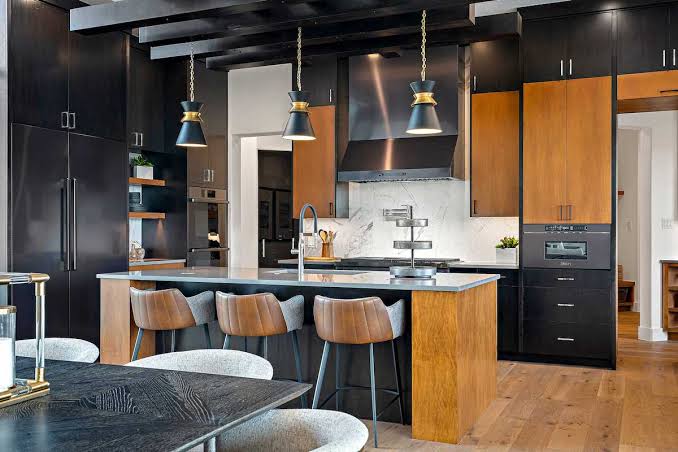
Black and natural wood create one of the most striking combinations for a modern dark kitchen. I love how the deep cabinetry provides drama while wood introduces warmth and texture. You can use black cabinets with a wooden island, oak shelves, timber flooring, or exposed wood details.
A light stone countertop can provide another layer of contrast and prevent the palette from becoming too heavy. Keep hardware simple and use warm lighting to enhance the materials. This combination works especially well when you want a kitchen that feels sophisticated and contemporary but still comfortable enough for relaxed family meals and everyday cooking.
A dark kitchen can bring depth, character, and a strong sense of style into your home without sacrificing comfort or function. I love how black, charcoal, navy, and deep green can work with wood, marble, stone, brass, greenery, and warm lighting to create completely different looks. The key is finding the right balance between darker surfaces and lighter or warmer elements.
You can start with cabinets, an island, lighting, or even a few accessories instead of changing the entire room. With thoughtful combinations of color, texture, and practical features, a dark kitchen can become a beautiful and inviting space for everyday living.